Crypto & Finance RSS
Cointelegraph.com News

Gerstein Harrow has filed similar cases in the past, arguing its clients have a claim to funds stolen by the DPRK and frozen by crypto firms.

Bitcoin soared as the MSCI AC Asia Index rose to a new high on Monday, an early indicator that investors viewed the weekend developments in a reasonably positive light.
Bitcoinist.com
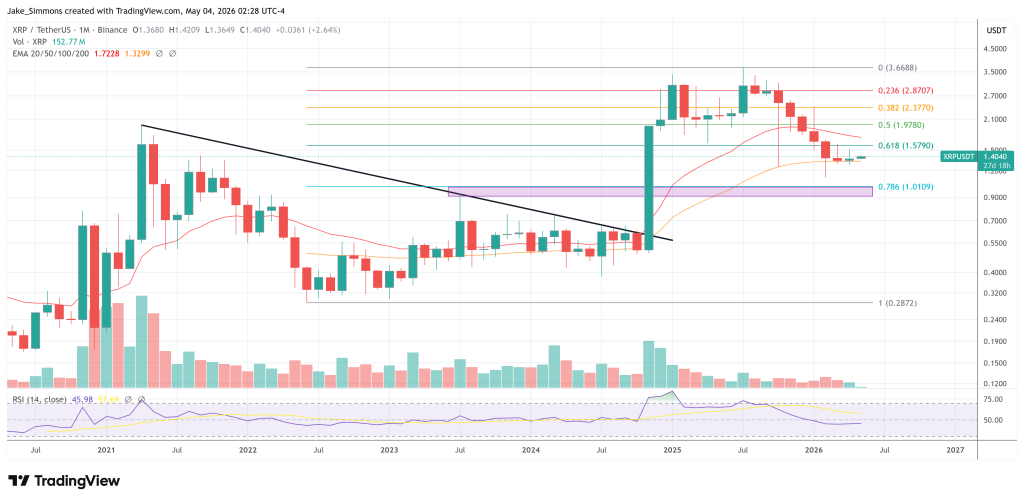
Evernorth Holdings has named Robert Kaiden, chief financial officer of the OpenAI Foundation, as a board nominee as the XRP-focused treasury company moves through its proposed business combination with Armada Acquisition Corp. II.
Evernorth Names OpenAI CFO To XRP Treasury Board
The latest SEC materials show Evernorth filed an amended Form S-4 tied to the transaction, with the filing detail page listing a Form S-4/A accepted on April 27 and filed on April 28. In a separate exhibit, Kaiden signed a consent dated April 27 to be named in Evernorth’s registration statement “as a nominee to the board of directors of the Registrant.” A parallel filing shows Derar Islim also signed the same director-nominee consent on the same date.
The board additions come as Evernorth seeks shareholder approval for a broader SPAC transaction. A proxy-card exhibit attached to the filing lists proposals for the business combination, a merger proposal, domestication, and related governance documents, underscoring that the transaction is still moving through the formal public-market approval process rather than representing a completed listing.
For XRP markets, the appointment matters less as a symbolic AI link than as part of Evernorth’s effort to professionalize a public treasury structure built around a single digital asset. Evernorth has described its model as a regulated corporate vehicle designed to provide transparent exposure to XRP while actively managing the asset within a treasury framework. In its March transaction update, the company said the filing disclosed its business plan, strategy, financials, leadership team and long-term vision for the first time.
CEO Asheesh Birla framed the strategy in broader capital-markets terms. “We believe global finance is entering a new era with digital assets playing a larger role in how capital is held, managed and deployed,” Birla said. “Evernorth is being built to participate in that evolution. Our focus is on combining public-market discipline with XRP blockchain-based financial infrastructure to help shape a more transparent, efficient and connected global financial system.”
The company’s treasury pitch is deliberately different from a passive fund structure. Evernorth has said it is designed to provide “simple, liquid, and transparent exposure to XRP” through a publicly listed vehicle, but also seeks to grow XRP per share over time through institutional lending, liquidity provisioning and DeFi yield opportunities.
That is where Kaiden’s profile is likely to draw attention. The OpenAI Foundation role places him inside one of the most watched firms on earth, while prior reports on the Foundation’s leadership expansion noted that Kaiden brought experience from Deloitte, Twitter and Inspirato. For Evernorth, his addition brings public-company finance and audit-adjacent experience to a board overseeing a crypto treasury strategy that will need to satisfy both digital-asset investors and traditional market expectations.
Evernorth has said the transaction is expected to raise more than $1 billion in gross proceeds, with institutional and strategic investors including Ripple, SBI Holdings, Pantera Capital, Kraken and Arrington Capital. Earlier transaction disclosures also said net proceeds would primarily fund open-market purchases of XRP, alongside working capital, general corporate purposes and transaction expenses.
Birla has described the active-treasury model as aligned with the XRP ecosystem itself. “Evernorth is built to provide investors more than just exposure to XRP’s price,” he said in the company’s launch announcement. “As we capitalize on existing TradFi yield generation strategies and deploy into DeFi yield opportunities, we also contribute to the growth and maturity of that ecosystem. This approach is designed to generate returns for shareholders while supporting XRP’s utility and adoption.”
At press time, XRP traded at $1.40.
Uphold will hand over more than $5 million to customers it helped deceive — a payout that amounts to over five times what the company actually earned from the deal.
A Settlement With Real Teeth
New York Attorney General Letitia James announced the settlement this week, closing the book on Uphold’s role in promoting CredEarn, a crypto savings product run by Cred, LLC and its CEO Daniel Schatt.
From January 2019 through October 2020, Uphold pushed CredEarn to users through its platform and mobile app, billing it as a safe place to park money and earn solid annual returns. What users weren’t told was how those returns were actually being generated.
Cred was funding them through microloans to low-income video game players in China — borrowers who had no credit histories and no access to traditional banks. That detail never made it into Uphold’s pitch to customers.
My office secured over $5 million from Uphold, a cryptocurrency platform, for misleading people and promoting a fraudulent investment scheme.
I’ll always work to ensure bad actors are held accountable for putting people’s livelihoods at risk.
— NY AG James (@NewYorkStateAG) April 29, 2026
The Insurance Claim That Wasn’t True
The misleading promotion didn’t stop at vague language. According to the AG’s office, Uphold told customers that Cred carried comprehensive insurance. That claim was false. No such insurance protecting retail investors from crypto losses existed in the industry at the time. On top of that, Uphold was operating without the required broker or commodity broker-dealer registration.
The risks caught up with everyone. Cred began racking up losses from its lending practices in March 2020. Eight months later, the company filed for bankruptcy. Thousands of Uphold customers worldwide were left with nothing to show for their deposits.
Under the terms of the settlement, affected users will be paid directly from the $5 million fund. Uphold is also owed $545,189 from Cred’s ongoing bankruptcy proceedings — and any money recovered from that process will be passed along to harmed investors as well. Customers can expect an email notification when funds reach their accounts.
“Investors should be able to trust the industry advice they receive,” James said in a statement, adding that her office would continue holding bad actors accountable for putting customers’ finances at risk.
Featured image from Finder, chart from TradingView
NewsBTC
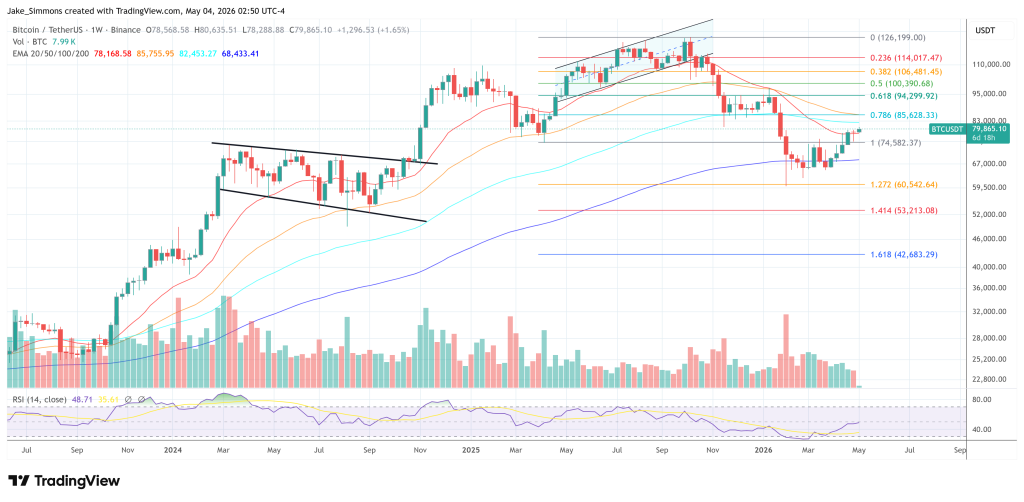
Bitcoin pushed back above $80,000 for the first time since late January, as traders reacted to a mix of geopolitical relief, steady ETF demand and a moderate short squeeze across crypto derivatives markets.
BTC traded near $80,000 after touching an intraday high of $80,529, reaching its highest level since January 31. The break matters because $80,000 had become the market’s nearest psychological ceiling after weeks of recovery from deeper Q1 stress.
Why Is The Bitcoin Price Up Today?
The main catalyst appeared to come from Washington. In a Truth Social post on Sunday, US President Donald Trump announced “Project Freedom,” an operation he said would help ships stranded by the closure of the Strait of Hormuz. Trump framed the move as a “humanitarian gesture” for neutral countries affected by the US-Israeli war with Iran, saying the US would “guide their Ships safely” through restricted waterways so they could resume business.
The message landed in a market already sensitive to any shift in the Hormuz standoff. The initiative is scheduled to begin Monday and could involve guided-missile destroyers, more than 100 aircraft and 15,000 service members, while Iran denounced the plan as a possible ceasefire violation. “They are victims of circumstance,” Trump wrote of the stranded crews. Any interference, he added, would “have to be dealt with forcefully.”
For crypto traders, the important point was not that Hormuz risk disappeared. It did not. The point was that the US announcement gave markets a concrete de-escalation path after weeks in which blocked shipping, higher energy risk and uncertainty around Iran had weighed on broader risk appetite. Iran’s effective closure of the strait had shaken global markets, with ships and seafarers stranded in the Persian Gulf since the war began.
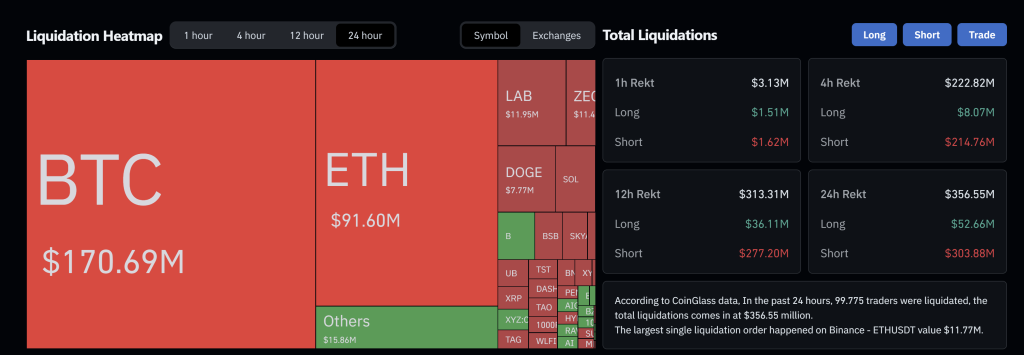
Derivatives positioning then amplified the move. CoinGlass data shows $356.55 million in total crypto liquidations over 24 hours, including $303.88 million in short liquidations against $52.66 million in longs. Bitcoin accounted for the largest liquidation block in the heatmap at $170.69 million, followed by Ethereum at $91.60 million. That is consistent with a moderate short squeeze: bearish positions were forced to buy back into a rising market, adding mechanical demand just as BTC cleared the $80,000 area.
The squeeze was not the only support. Spot bitcoin exchange-traded funds in the US recorded a fifth consecutive week of inflows, totaling $153.87 million last week, according to SoSoValue data. That flow profile helped strengthen the argument that the move was not purely a headline-driven spike, but also reflected continued institutional allocation after weeks of recovery.
At press time, BTC traded at $79,865.
Dogecoin started a decent increase above $0.1050 against the US Dollar. DOGE is now consolidating and might aim for an upside break above $0.1150.
- DOGE price started a fresh increase above $0.1150 and $0.120.
- The price is trading above the $0.1085 level and the 100-hourly simple moving average.
- There is a bullish trend line forming with support at $0.1085 on the hourly chart of the DOGE/USD pair (data source from Kraken).
- The price could aim for a fresh increase if it remains stable above $0.1150.
Dogecoin Price Climbs Above $0.1120
Dogecoin price started a fresh increase after it settled above $0.10, like Bitcoin and Ethereum. DOGE climbed above the $0.1050 resistance to enter a positive zone.
The bulls were able to push the price above $0.1120. A high was formed at $0.1137 and the price is now consolidating above the 23.6% Fib retracement level of the upward move from the $0.1009 swing low to the $0.1137 high.
Dogecoin price is now trading above the $0.1100 level and the 100-hourly simple moving average. There is also a bullish trend line forming with support at $0.1085 on the hourly chart of the DOGE/USD pair.
If there is another increase, immediate resistance on the upside is near the $0.1135 level. The first major resistance for the bulls could be near the $0.1150 level.
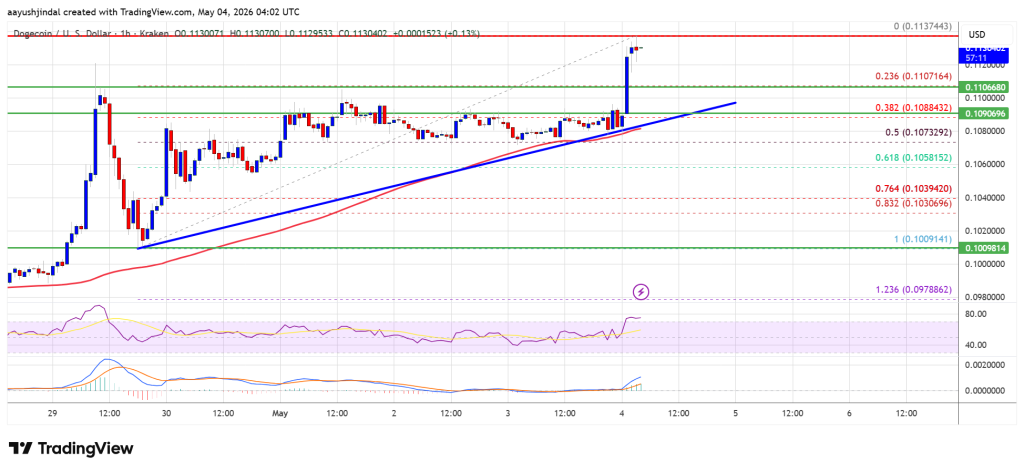
The next major resistance is near the $0.120 level. A close above the $0.120 resistance might send the price toward $0.1220. Any more gains might send the price toward $0.1250. The next major stop for the bulls might be $0.1320.
Another Decline In DOGE?
If DOGE’s price fails to climb above the $0.1150 level, it could start a downside correction. Initial support on the downside is near the $0.1100 level. The next major support is near the $0.1085 level or the trend line.
The main support sits at $0.1075 and the 50% Fib retracement level of the upward move from the $0.1009 swing low to the $0.1137 high. If there is a downside break below the $0.1075 support, the price could decline further. In the stated case, the price might slide toward the $0.1020 level or even $0.10 in the near term.
Technical Indicators
Hourly MACD – The MACD for DOGE/USD is now gaining momentum in the bullish zone.
Hourly RSI (Relative Strength Index) – The RSI for DOGE/USD is now above the 50 level.
Major Support Levels – $0.1085 and $0.1075
Major Resistance Levels – $0.1135 and $0.1150.
CryptoPotato
Institutions are buying Bitcoin (BTC) at more than five times the rate miners are producing it, and according to Capriole Investments founder Charles Edwards, that gap has historically come right before huge price gains.
In a post on May 4, Edwards said every instance in the past of this demand-to-supply ratio produced an average return of 24% over the following month, which, from current levels, would take BTC to around $96,000.
What the Data Shows
The 500% figure comes from tracking daily institutional purchases, primarily by public companies and ETFs, against the roughly 450 BTC mined each day since the 2024 halving.
“Every time it’s been this high before, price has shot up over the next week,” stated Edwards. “The average return in prior cases is +24% over 1 month from here, that would take it to around $96K.”
Earlier today, Bitcoin pushed past $80,000 for the first time since January. It had been trading at levels from $78,000 to $80,500 within the last 24 hours, per CoinGecko, and had risen by 20% over the last 30 days.
The rise sparked a wave of forced liquidations, which resulted in the loss of more than $162 million worth of short positions over the course of 24 hours, based on data from CoinGlass.
Trading volume also jumped 95% in 24 hours to around $34 billion.
Other analysts have added weight to the bull case, though with varying degrees of conviction. For instance, trader Taiki Maeda wrote that he expects Strategy to buy $2 to $3 billion worth of Bitcoin over the next two weeks via its STRC instrument, with the acquisitions likely to “accelerate into May 14th.”
On his part, chartist Ali Martinez pointed to a multi-decade ascending trendline that BTC has bounced from in 2017, 2018, 2020, and 2022, arguing that the recent dip to $65,000 suggests “the bottom could be in.”
The Other Side of the Coin
BTC’s crossing above $80,000 is on the heels of a 12% rise last month, but according to CryptoQuant, the increase was fueled almost exclusively by perpetual futures interest, not spot trading.
It noted that Bitcoin’s apparent demand indicator, which tracks 30-day on-chain spot activity, stayed negative throughout the entire April rally.
“The divergence between rising price and contracting spot demand is one of the clearest on-chain signals that price gains are speculative rather than structural,” the firm wrote, adding that this demand structure mirrors what was seen at the start of the 2022 bear market.
The post Institutional Demand at 500% of Bitcoin Supply Could Drive BTC to $96K: Analyst appeared first on CryptoPotato.
[PRESS RELEASE – Steinhausen, Switzerland, May 4th, 2026]
Swiss-regulated TrustLinq, the first platform to enable direct fiat settlement from self-custodial crypto wallets to third-party bank accounts, has integrated Ripple Payments into its live payment infrastructure. The integration extends TrustLinq’s fiat settlement reach across major global corridors, enabling faster and more cost-efficient local payouts in over 80 currencies across more than 170 countries.
TrustLinq CH AG, a Swiss-regulated crypto to third-party fiat settlement service, is now processing live transactions through Ripple Payments, the cross-border payments infrastructure operated by Ripple, the leading provider of blockchain-based enterprise solutions across traditional and digital finance. The integration adds Ripple’s infrastructure and enables real-time, multi-rail settlement across fiat and digital assets for TrustLinq’s existing payment rail stack, which already includes SEPA, SWIFT, ACH, Faster Payments, and more than 170 countries, over 80 currencies, including 60 local banking corridors.
TrustLinq’s core function is distinct from standard crypto off-ramps. Users fund a payment from their own self-custodial stablecoin wallet, and TrustLinq settles it directly as a local bank transfer in fiat to the recipient’s bank account. No exchange or bank account is required by the sender. The recipient does not need a crypto wallet or a TrustLinq account. The payment arrives as a standard local bank transfer to the recipient. Ripple Payments now forms part of the infrastructure that makes that settlement possible across an expanded range of corridors.
With more than $100 billion in processed volume globally and coverage across 60+ markets, Ripple Payments is the end-to-end solution for moving money across borders, giving institutions a faster, more transparent way to send, receive, and settle funds in both fiat and stablecoins. The addition of Ripple’s network reduces TrustLinq’s reliance on correspondent banking, extending direct local corridor access beyond the reach of traditional correspondent banking and SWIFT routing.
“TrustLinq exists to make crypto function as real money for real payments. When someone sends a supplier invoice, pays rent, or disburses contractor fees across borders, the payment arrives as a standard bank transfer in the recipient’s local currency. Integrating Ripple Payments strengthens the infrastructure behind that promise and extends our reach across corridors that matter to our users.” Lili Metodieva, Co-Founder, TrustLinq.
TrustLinq supports USDT (ERC-20 and TRC-20), USDC and EURC. The service is live and available to personal and business users at trustlinq.com.
About TrustLinq
TrustLinq CH AG is a Swiss-regulated crypto-to-fiat payment service headquartered in Steinhausen, Switzerland. The platform enables direct settlement from self-custodial stablecoin wallets to third-party bank accounts, supporting USDT, USDC and EURC in over 170 countries, more than 80 currencies, and exceeding 60 local payment corridors. Recipients require no crypto account. Senders require no exchange or bank account.
For more information, users can visit trustlinq.com
Ripple https://ripple.com/press-releases/
The post TrustLinq Integrates Ripple Payments to Expand Global Infrastructure for Direct Crypto-to-Fiat Bank Transfers appeared first on CryptoPotato.
99Bitcoins
Carrot, a Solana-based DeFi yield protocol, announced its permanent shutdown on April 30, 2026, after losing approximately $8 million in total value locked, roughly half its TVL – to the fallout from the April 1 Drift Protocol exploit that drained an estimated $285 million from one of Solana’s largest perpetual futures platforms.
Carrot was not directly hacked. It was taken down by a protocol it depended o, and that distinction is what makes this story more than a routine exploit summary.
Users have until May 14, 2026, to voluntarily withdraw funds from Carrot’s three core products. After that deadline, the team will begin force-deleveraging all remaining positions to 1x leverage, freeing liquidity for final CRT stablecoin redemptions.
Carrot’s official account on X confirmed the decision plainly: “Carrot is shutting down. This is certainly not the outcome we wanted, but the situation with the Drift exploit has proven to be catastrophic for our continued operations.”
A snapshot of CRT token holdings was taken at 20:00 UTC on April 1, the exact moment of the Drift exploit, to preserve proportional claims for any future Drift recovery distributions paid via IOU token.
1/ Carrot is shutting down
This is certainly not the outcome we wanted, but the situation with the Drift exploit, has proven to be catastrophic for our continued operations.
— Carrot (@DeFiCarrot) April 30, 2026
The detail most headlines are missing is that Carrot never had a vulnerability in its own code. Its Boost and Turbo products routed user funds through Drift-integrated vaults, meaning Drift’s security was also Carrot’s security, whether Carrot’s users knew that or not.
DISCOVER: The Next 1000x Crypto Gem Before It Lists on Binance
How Did the Drift Protocol Exploit Actually Work?
The Drift exploit, which the Drift Protocol confirmed occurred at approximately 20:00 UTC on April 1, used what investigators have described as a novel durable nonce exploit, a technique that manipulates how Solana handles pre-authorized transaction signing to compromise administrative controls.
Attackers, suspected to have ties to North Korean state-sponsored groups, spent roughly three weeks preparing the attack before executing it. Over 50% of Drift’s TVL was drained in minutes, triggering an immediate suspension of deposits and withdrawals across the platform.
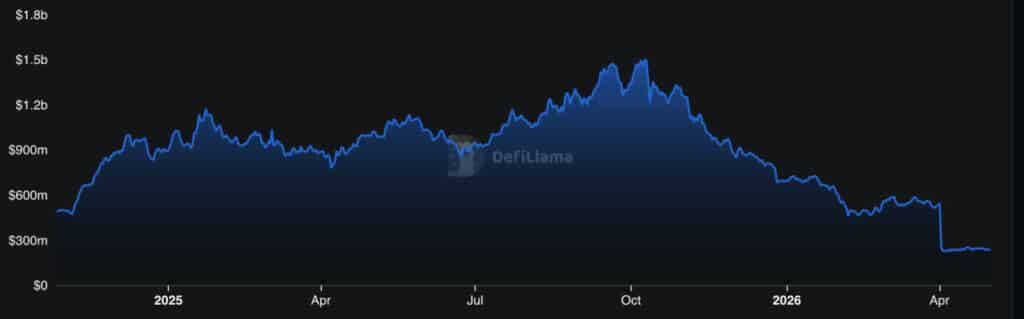
Carrot held significant exposure through Drift-integrated vaults and liquidity positions. Shortly after the exploit, the team paused all minting and redemption functions while assessing the damage.
By mid-April, Carrot’s CRT net asset value had been adjusted to approximately $57.52 to $57.58 per token, reflecting both realized and unrealized losses. The Drift hack is now the largest DeFi exploit of 2026 and the second-largest in Solana’s history – a data point that matters for anyone evaluating the health of the broader Solana ecosystem right now.
Carrot operated for more than two years before this shutdown, building what it described as a “yield operating system” for Solana. No management fees apply during the wind-down period, and the team has confirmed that deposited funds remain the legal property of users throughout the process.
EXPLORE: Best Crypto Presales to Watch
The post Solana Yield Protocol Carrot Shuts Down After $8M Exploit appeared first on 99Bitcoins.
XRP Ripple CTO David Schwartz stood before a packed room at XRPLasVegas 2026 on May 1 and said something that made parts of the XRP community uncomfortable: Back the CLARITY Act now, even though it isn’t perfect.
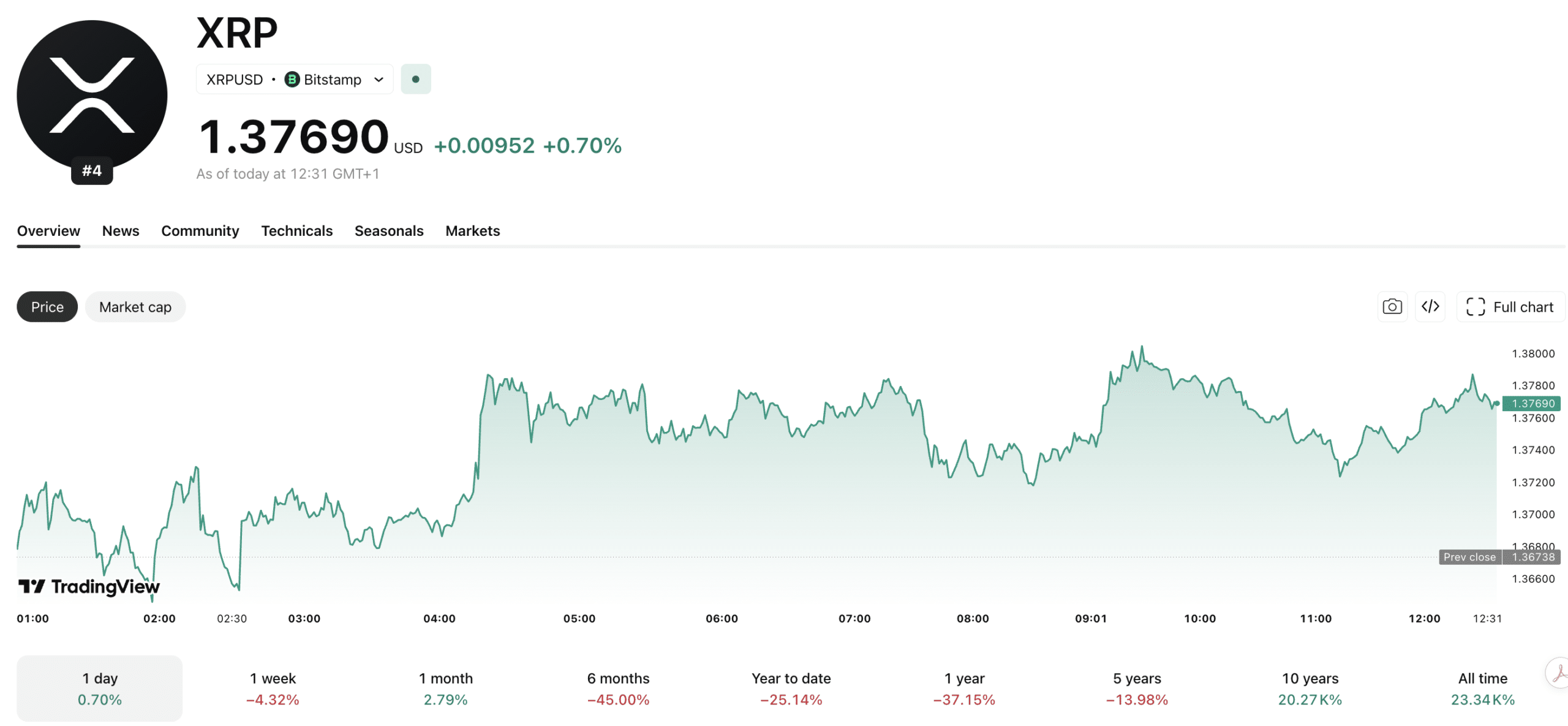
The XRP token is currently trading around $1.38, up a modest +0.4% over the past 24 hours, a deceptively calm number given the regulatory storm swirling underneath it. The real question isn’t whether the bill is flawed. It clearly is. The question is whether an imperfect law finally on the books does more for your XRP than another two years of legal limbo.
XRP ARMY ALERT: DAVID SCHWARTZ DROPPING RETAIL BOMBSHELLS IN VEGAS:

“WE’RE GOING TO MOVE ON TO RETAIL AT SOME POINT.”
David straight-up confirmed Ripple’s master plan:
Enterprise TODAY paves the way for RETAIL TOMORROW – exactly like the Internet started with… pic.twitter.com/83bVSwyocv
— Archie
(@Archie_XRPL) May 1, 2026


The detail most headlines are missing is the strategic logic behind Schwartz’s endorsement. This isn’t Ripple waving a white flag on a bad bill; it’s a calculated bet that market stability and retail investor protection are worth more right now than holding out for legislative perfection.
After years of watching the SEC treat enforcement actions as a substitute for actual rulemaking, Schwartz argues that any concrete framework beats the vacuum that’s quietly been punishing XRP holders whenever a lawsuit lands.
(SOURCE: TradingView)
What the CLARITY Act Actually Does and What Critics Get Wrong About It
Think of the CLARITY Act like a building code for crypto. Right now, developers and companies are constructing financial products in a city with no zoning law, which sounds freeing until the authorities show up and demolish what you built.
The Act aims to assign oversight of spot crypto markets to the CFTC, define what constitutes a decentralized protocol, and establish clear liability rules for developers. For stablecoin issuers specifically, it establishes who can issue them and how reserves must be backed.
The criticism is real, though. One sticking point is the bill’s restriction on stablecoin yield; the current draft allows only activity-based rewards and leaves the SEC, CFTC, and Treasury 12 months to clarify the finer points.
DeFi advocates warn that those yield limits could kneecap innovation in a sector Schwartz himself acknowledged has been stuck at roughly $150Bn due to limited real-world utility. Ripple’s broader technical roadmap makes clear the company is thinking well beyond stablecoins, but the bill, as written, still leaves important questions unanswered for a year or more.
Schwartz’s framing, delivered plainly at the conference: “I think the strategy is let’s get as much as we can as soon as we can.” He compared the Act’s potential to the early internet era, an imperfect infrastructure that nonetheless unlocked everything that followed. “Clarity Act passing is the starting gun,” he said, signaling that institutional capital is waiting on the sidelines for exactly this kind of green light.
Can XRP Ripple Break Higher If the CLARITY Act Passes?
XRP DEFIES THE MARKET WITH $3.6M ETF INFLOWS
While ETFs for $BTC and $ETH suffered more than $200 million in net outflows, spot @Ripple products clocked an inflows of some $3.59 million on April 29.@Bitwise's $XRP ETFs leads the five-strong pack with an AUM of more than $312… pic.twitter.com/aZjtMUbJD1
— BSCN (@BSCNews) April 30, 2026
XRP Ripple is holding in a consolidation range after a strong run earlier this year, with ETF inflows reaching 2026 highs in April, a signal that institutional interest is already building ahead of any legislative resolution.
The technical picture reflects that tension: buyers are present but not yet committing to a breakout.
- Bull case: The CLARITY Act passes in substantive form in Q2–Q3 2026. Regulatory certainty unlocks the institutional capital Schwartz described as waiting on the sidelines. XRP breaks above $1.40 resistance and targets the $1.50–$1.60 range as the legal risk premium compresses.
- Base case: The bill passes in a watered-down form after further amendments, or advances out of committee but stalls heading to a floor vote. XRP Ripple consolidates between $1.30 and $1.40, with moderate institutional inflows but no major re-rating until clarity fully arrives.
- Bear case: Post-recess negotiations collapse, bipartisan momentum stalls, or the bill triggers a renewed turf battle between the SEC and CFTC. Enforcement risk reprices XRP toward the $1.15–$1.20 range as regulatory uncertainty returns to the foreground.
Ripple CEO Brad Garlinghouse had estimated an 80% chance of the bill passing, citing bipartisan committee language and White House support – though that timeline slipped past the April recess. Watch for committee votes and amendments in May and June 2026 as the clearest near-term signal.
EXPLORE: Best Crypto Presales Right Now
Follow 99Bitcoins on X, YouTube, and Telegram for more crypto news and analysis.
The post XRP Ripple CTO Backs ‘Imperfect’ Crypto Bill: Why It Matters for Your XRP appeared first on 99Bitcoins.
Crypto Briefing
Macron's diplomatic push and Trump's military guidance hint at easing tensions, potentially reducing invasion risks and impacting oil markets.
The post Macron urges US-Iran coordination as Trump orders military guidance in Hormuz appeared first on Crypto Briefing.
The evacuation signals potential de-escalation, possibly easing regional tensions and influencing future diplomatic and economic engagements.
The post US evacuates 22 crew from Iranian ship amid Hormuz blockade tensions appeared first on Crypto Briefing.
crypto.news
Ethereum price is eyeing a breakout from the $2,400 resistance, which has capped the token’s gains over the past week. According to data from crypto.news, Ethereum (ETH) price rebounded 3.5% to $2,393 on May 4 before facing rejection at $2,400…
Morgan Stanley advises 2%–4% Bitcoin exposure as MSBT demand grows, while bank balance sheet adoption faces regulatory hurdles.
Coinlabz
Tectonic Crypto stands out in the cryptocurrency world, *offering real-time data* and *insights* to its users. It shines brightly…
The post What Is Tectonic Crypto appeared first on Coinlabz.
Big Eyes cryptocurrency jumped by **300%** in community engagement last month, grabbing attention with its cool angle in the…
The post What Is Big Eyes Cryptocurrency appeared first on Coinlabz.
HTTP error 521 on https://bitrss.com/rss.xml
Failed to fetch feed: https://bitrss.com/rss.xml
Failed to fetch feed.
https://dumbbell-exercises.com/

The post บาคาร่าออนไลน์ เว็บตรง อันดับ 1 เล่นบาคาร่าสด ปลอดภัย จ่ายจริง appeared first on https://dumbbell-exercises.com/.

The post บาคาร่าทุนน้อย เล่นยังไงให้ได้กำไร รวมเทคนิคทำเงินที่มือใหม่ต้องรู้ appeared first on https://dumbbell-exercises.com/.
Bitcoinik
The marketing industry has a vocabulary problem.
Ask any CMO about their distribution strategy and they will describe their content calendar. Ask about their channel mix and they will explain their paid media budget. Ask how they ensure their brand shows up inside the AI-generated answers their customers are already reading and most will go quiet.
“Distribution” has become a synonym for “posting.” That is why most brands are invisible.
Mohit Ahuja has been sitting with this problem since a campaign he ran at Cultbike.fit did something he did not fully understand until he looked at the data underneath it. His team had built a genuinely good piece of content: comedian Atul Khatri, sharp creative, the kind of video that earns internal praise before it earns external reach. It performed. It outperformed.
The creative quality was not why.
When Ahuja ran the analysis, distribution placement explained the outcome. The video had not found its audience because it was good. It found its audience because of precise, deliberate decisions about where and how to put it. “Great creative was necessary but not sufficient,” he says. “It was the distribution that turned a funny video into a conversation people were having at their offices.”
He spent the next few years asking a question nobody in the industry had a satisfying answer to: if distribution is what actually drives outcomes, why does no platform exist to aggregate it?
The Gap That Should Not Exist
Consider what has been built for every other part of the marketing function.
Content creation: dozens of tools, including now AI tools that generate unlimited output at near-zero cost. Paid advertising: entire platforms with sophisticated targeting, real-time bidding, and attribution infrastructure. CRM, email, analytics, social scheduling, all of it has been systematised, consolidated, and made accessible to teams of every size.
Distribution has not. The creator economy, newsletter ecosystem, podcast network, Reddit community, and Answer Engine landscape, the actual places where brand reputation forms and purchase decisions are made, remain a fragmented collection of individual relationships managed through emails, spreadsheets, and agency retainers, with no unified layer sitting above them.
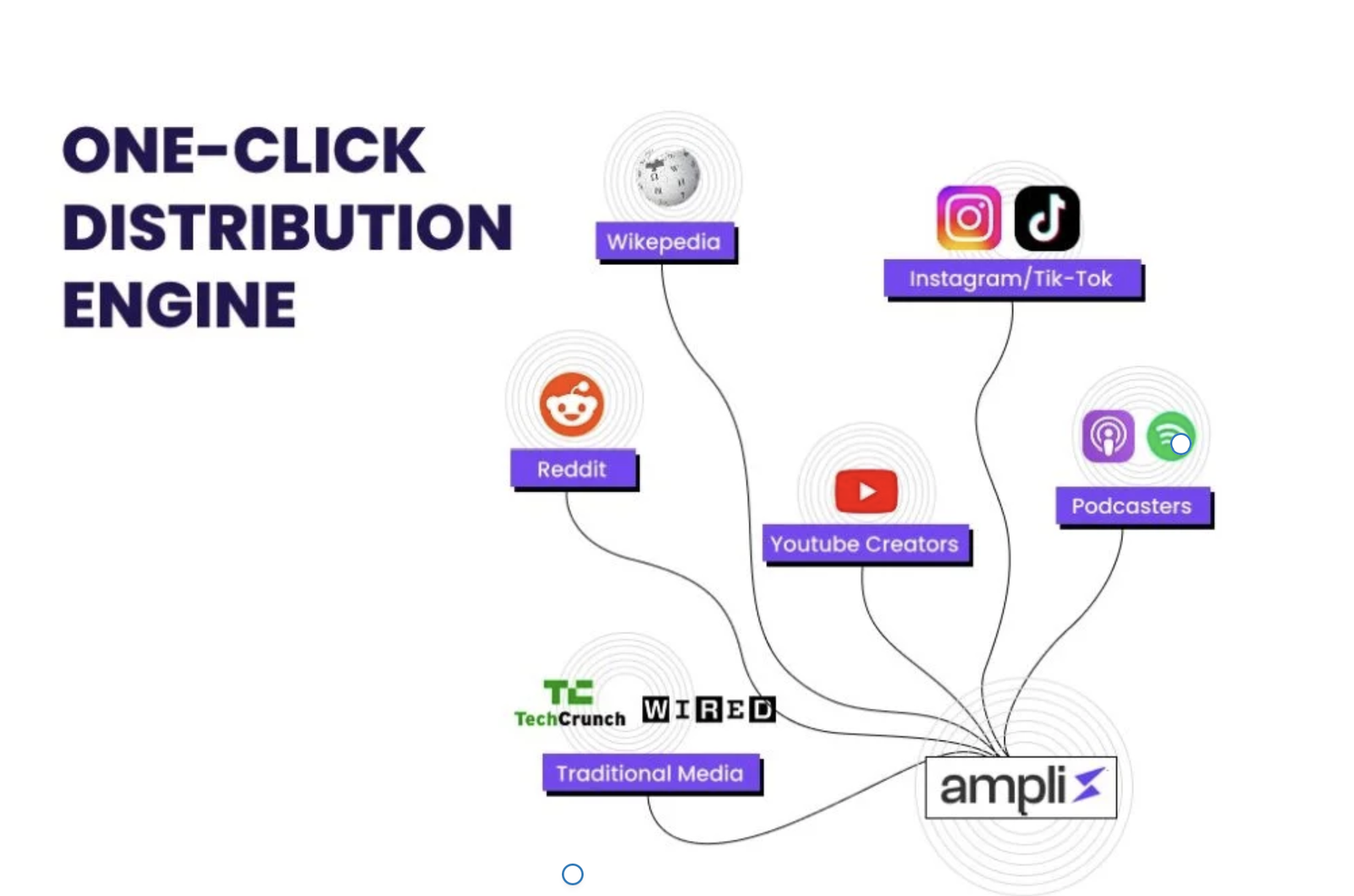
This is the gap Ampli5 launched into this week. The company, based in Singapore and now live at ampli5.ai, is the first distribution aggregator for brand marketing. A single platform that connects brands to YouTube creators, newsletter operators, podcast networks, TikTok influencers, X communities, Reddit, programmatic inventory, and AI-answer visibility, and routes intelligently across all of them based on where the audience actually is.
That category, distribution aggregator, did not exist before this week. That is not positioning language. It is a description of the market.
Why AI Made This the Only Bet Worth Making
The arrival of AI content tools did not create the distribution problem. It made the cost of not solving it terminal.
When content was expensive, creative quality was a natural differentiator. Teams with resources had an edge. AI collapsed that asymmetry. Every competitor now has access to the same production capability. When everyone is producing at volume, volume is not an advantage. Creative quality, always difficult to sustain, becomes nearly impossible to maintain as a moat when the baseline has been raised across the entire market.
What AI cannot generate is distribution reach. The accumulated presence across the channels where your audience actually forms opinions, the creator relationships, the newsletter placements, the community trust, the answer engine visibility, takes time and operational sophistication to build. It cannot be prompted into existence.
Ahuja’s framework for this, what he describes as the infrastructure layer that sits between brands and the fragmented distribution landscape, is laid out in full at his blog. The essay makes the case for why distribution should be thought of as a utility rather than a vendor relationship, and why no one had built that utility until now.
The Aggregator Advantage
The Distribution Atlas, Ampli5’s data layer that maps where a brand’s target audience actually concentrates across the internet, is what makes the aggregator model work in practice. Before a campaign launches, the Atlas identifies where the density is. The platform then routes to those concentrations rather than broadcasting broadly.
The difference is the difference between finding your customer and hoping your customer finds you.
Rajat, CMO at Stader Labs, described the result concisely: “With Ampli5, we reduced our go-to-market timeline by two weeks.”
Two weeks on a launch cycle is not a marginal improvement. It is a structural change to how a growth team operates.
What Comes Next
Ampli5 is onboarding brand partners by invitation. The harder tests, whether the Atlas holds its predictive accuracy across categories, whether the aggregator model scales beyond D2C and fitness, whether attribution survives contact with enterprise requirements, are still ahead.
But the founding insight is not in question. The marketing stack has everything except the one layer that determines whether any of it works. The brands that have figured this out are already competing differently. The ones still conflating content production with distribution strategy are producing more content into the same invisible void.
The first distribution aggregator is live. The category is being created now, not later.
The early movers will be very hard to catch.
Mohit Ahuja is the founder and CEO of Ampli5. The platform is live at ampli5.ai.

Digital platforms have spent years monetizing attention, clicks, and data. Yet the most meaningful value online has always come from relationships. Relationship Finance (ReFi) reframes how value is created by turning trust, participation, and collaboration into measurable economic signals. Instead of rewarding passive activity or speculation, this model connects social engagement with blockchain-backed incentives.
MaAvatar applies Relationship Finance through a structured valuation layer that records interaction quality and community contribution. Supported by the $MAAVI token and guided by Maavi Bot, the ecosystem links identity, conversation, and token mechanics into one framework – where relationships become assets within a transparent, on-chain system.
In this post, let’s understand how MaAvatar built its valuation layer and how it impacts the ecosystem.
Key Takeaways
- Relationship Finance measures trust and participation rather than capital alone.
- MaAvatar builds a blockchain-backed valuation layer for digital relationships.
- The valuation layer records interaction quality, collaboration, and engagement.
- The $MAAVI token supports staking, governance, and ecosystem incentives.
What is Relationship Finance (ReFi)?
Traditional finance rewards capital allocation. Social platforms reward attention. Relationship Finance introduces a third model: value derived from verified relationships whether its between organisations or individuals.
In ReFi, trust, contribution, and long-term participation become measurable assets. Blockchain infrastructure makes these signals transparent and tamper-resistant. Instead of extracting value from users, ReFi frameworks aim to circulate value inside the network.
This approach connects social behavior with economic incentives. Relationships stop being invisible and start becoming structured components of a digital economy.
Why Relationship Finance Matters in Web3 Social Systems
Many token ecosystems struggle with short-term speculation. Early participants accumulate rewards, liquidity leaves, and communities weaken.
ReFi addresses this by linking rewards to participation quality and contract completion rates. The focus shifts from passive token holding to active engagement and outcomes. That is where platform like MaAvatar position their model differently.
MaAvatar integrates ReFi into a social discovery platform. The goal is simple: relationships become the foundation of value creation rather than an afterthought.
How MaAvatar Applies Relationship Finance
MaAvatar translates ReFi from theory into protocol architecture with a DAO. Its model shifts value creation from transactions to relationships through a structured valuation layer built on attestations, mutual staking logic, and reputation-linked finance.
MaAvatar: Relationship Finance (ReFi) and valuation layer
Here’s how that architecture works:
Module 1: The Attestation Engine
The Attestation Engine converts social interaction into verifiable on-chain credentials. Inside MaAvatar, Maavi Bot acts as a relationship oracle. With user consent and privacy-preserving methods such as zero-knowledge proofs, it analyzes engagement patterns and issues Verifiable Relationship Credentials (VRCs).
These credentials may appear as non-transferable SBTs or signed proofs like:
- CompatibilityProof_SBT for consistent match quality.
- CommunityStanding_SBT based on peer validation.
- CollaborationAchievement_NFT for completed joint tasks.
All attestations are recorded in a dedicated registry smart contract deployed on a privacy-focused Layer 2 network. VRCs follow the W3C Verifiable Credentials standard, allowing portability.
Module 2: Staking and Bonding
The second module links trust with token participation through the $MAAVI token.
- Vibe Vaults allow two or more users to stake $MAAVI tokens into a shared, non-custodial smart contract wallet. Plus, the Vibe Campaign is live on Taskon that allows you to connect to the MaAvatar community in a deeper way. It’s a 30-day experience (Feb 16 – Mar 16) built around real connection with continued seasons of campaign . Create your profile on Maavi Bot, complete quests, check in daily, and reap the rewards.
- Participants define staking terms, duration, and purpose before activating the vault through their MaAvatar wallet. The staked tokens earn yield sourced from ecosystem fees.
- Vault performance improves when members maintain strong Relationship Health Scores derived from their VRCs. Stronger engagement can increase yield multipliers.
- Trust Tranches extend this logic into lending. A ReliabilityScore determines borrowing conditions in a DeFi pool using the VRC’s as collateral.
This module embeds ReFi directly into economic incentives.
Module 3: Relationship Derivatives
The third module introduces collaborative financial instruments built around shared goals.
- You can deploy smart contracts representing a future claim on a portion of the governance tokens.
- Community members purchase Support Shares that provide upfront capital. If the milestone is verified by oracle logic, supporters receive agreed payouts. If the target is missed, capital is returned pro-rata.
- This structure turns social credibility into measurable financial opportunity. Outcomes are recorded within the valuation layer, strengthening each participant’s Relationship Finance profile.
By linking commitment, accountability, and capital, MaAvatar creates a framework where social capital influences economic participation.
The Role of the $MAAVI Token
The $MAAVI token acts as the economic engine of the ecosystem.
Within MaAvatar, the $MAAVI token supports staking mechanisms, access to premium features, governance participation, and incentive alignment across the network.
Rather than rewarding passive speculation, the $MAAVI token aligns incentives with engagement inside the platform. Relationship Finance depends on this alignment to avoid extractive token dynamics.
$MAAVI tokens’ presale will be launched soon, powering premium features, NFTs, and exclusive benefits in the MaAvatar ecosystem.
How MaAvatar Builds Long-Term Network Value
Long-term value requires more than token incentives. It requires meaningful interactions.
MaAvatar combines:
- Avatar-based identity
- AI-powered matchmaking through Maavi Bot in telegram and discord communities.
- A blockchain-backed valuation layer
- Utility access via the $MAAVI token
MaAvatar also builds long-term network value by using Maavi Bot to improve relationship quality, which strengthens the valuation layer and reinforces the $MAAVI token economy.
Maavi Bot: Beta is now live
Together, these components form a practical implementation of Relationship Finance. Relationships become measurable. Contribution becomes trackable. Economic participation links directly to social participation.
That structure supports sustainable growth inside the ecosystem.
Wrapping Up
Relationship Finance introduces a model where trust and participation with contributions carry measurable value. MaAvatar applies this concept through a blockchain-backed valuation layer that connects user interaction, AI guidance from Maavi Bot, and the economic alignment of the $MAAVI token.
Instead of extracting value from attention, MaAvatar builds a system where relationships or collaborations shape the economy itself. In that structure, social capital turns into structured digital capital – forming the foundation of Relationship Finance inside MaAvatar.Visit www.maavatar.io to know more about the upcoming $MAAVI token launch, airdrops, and more.
Crypto News Alerts: Bitcoin, Ethereum & Cryptocurrency News
Bybit has introduced an exclusive Cashback Booster for new Bybit cardholders, offering 10% cashback on lifestyle spending for a full 30 days. The cashback is applicable to crypto-funded transactions across eligible merchant categories, including restaurants, travel, transport, fashion, and beauty.
Most crypto holders face the same dilemma: should I sell to access cash, or hold and potentially earn nothing? Figure provides compromises for both, and even adds a $50 bonus for new users who deposit $500.
The Coins Post
Caroline Crenshaw’s departure from the SEC on January 2 marks a turning point for crypto regulation in Washington. The longtime cryptocurrency skeptic’s exit leaves the commission operating under a 3-0 Republican majority—a historic shift that clears the way for Paul Atkins’ pro-innovation agenda to move forward without meaningful internal opposition.
What Changed at the SEC
Crenshaw spent over a decade at SEC agency, consistently raising concerns about cryptocurrencies, digital assets and investor protection.
Her exit coincides with the broader regulatory reorganization under the Trump administration, which has explicitly positioned itself to make the U.S. the “crypto capital of the world.”
The commission now operates with fewer members than authorized, as Trump hasn’t yet filled the vacant seats—a strategic pause that effectively gives the Republican-majority commissioners free rein on policy.
Why This Matters Right Now
The timing couldn’t be sharper. SEC Chair Paul Atkins has already signaled plans to introduce an “innovation exemption” that would let crypto startups test new products under lighter regulatory requirements, provided they meet basic consumer protections. [3][7] That proposal was expected within 30 days of December 2, meaning it could arrive any moment. With Crenshaw gone, there’s no institutional voice pushing back on the exemption’s scope or implementation details.
The broader regulatory picture is also shifting. The Senate is scheduled to hold hearings in January on the CLARITY Act—landmark legislation designed to end years of turf warfare between the SEC and CFTC by clearly dividing jurisdiction over different crypto products. [3][7] White House crypto adviser David Sacks said in December the bill is “closer to passage than at any point in the past.” [3] These aren’t minor procedural tweaks. They represent a fundamental reordering of how Washington approaches digital assets.
What’s Next
The real action starts immediately. Watch for the innovation exemption announcement—it could drop with minimal fanfare. Then track the Senate hearings on CLARITY in January. If that bill moves to a floor vote and passes, the crypto industry will have concrete answers about regulatory jurisdiction for the first time in years. Markets have been pricing in regulatory clarity for months. Crenshaw’s departure removes one of the last obstacles to delivering on it.
The post SEC’s Pro-Crypto Shift Accelerates as Key Skeptic Crenshaw Exits appeared first on The Coins Post.
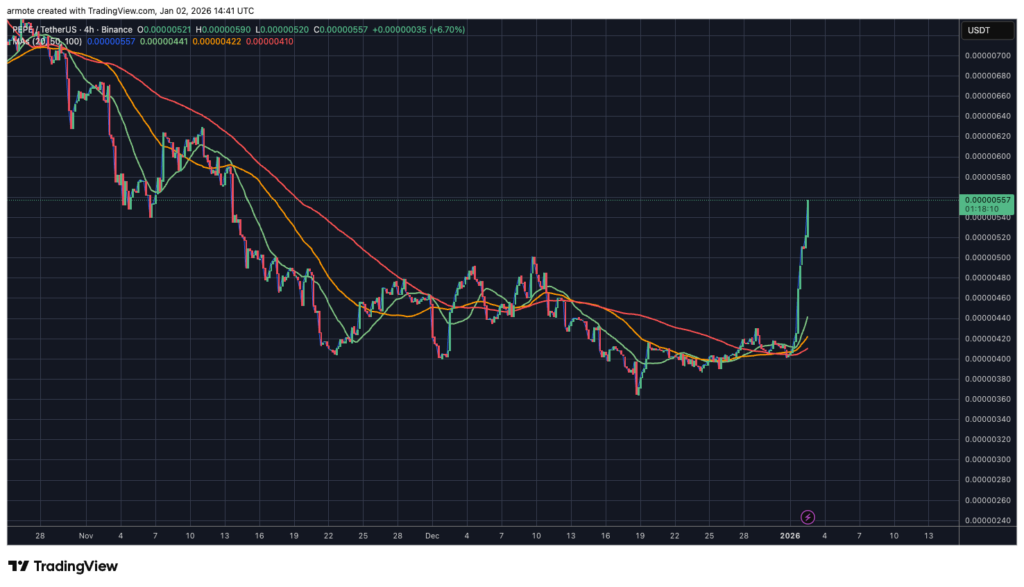
PEPE just ripped 26% higher on January 2, hitting $0.000005106 as trading volume exploded past $800 million.
That’s no thin pump—retail’s back, Robinhood holders sitting on 8.3% of supply, and a Hyperliquid whale named James Wynn dropped a bombshell prediction: $69 billion market cap by end-2026. If you’re trading memes, this is your wake-up call. Why now? New year FOMO meets bold calls in a market where BTC chills at $88k.
On-Chain Breakdown
PEPE’s ERC-20 on Ethereum. No fancy DeFi twist here—just pure meme liquidity. Volume spiked 370-400% in 24 hours, open interest jumped 82% to $446.5 million on derivatives. RSI hit 67, screaming bullish momentum after breaking $0.0000042 resistance.
Whales aren’t dumping. That official “We ride at dawn” tweet lit socials on fire—crypto Twitter’s buzzing. Supply’s fixed at 420.69 trillion tokens. If Wynn’s right, that’s $0.000164 per PEPE. Math checks out. But Ethereum gas? Still a killer for small trades.
Market Mayhem
Total crypto cap up 1.07% to $2.99T. BTC +1.21% at $88,765, dominance slipping to 59.22%—alts eating its lunch. PEPE led top gainers, outpacing Story (+25%) and Mog. Volumes hit $164B market-wide. No massive liqs reported, but meme sector OI surging means leveraged degens are in.
BTC’s post-halving year ended red for first time ever—down 6% in 2025 despite $126k ATH. ETFs pulled $348M, but macro liquidity rules now. PEPE doesn’t care—it’s riding retail hype while big boys consolidate.
Reactions Pour In
James Wynn, that Hyperliquid ser, straight-up said PEPE hits top meme status like SHIB did last cycle—if bull market holds. “We ride at dawn” from @pepe went viral. Community’s pumping: “PEPE to the moon” threads everywhere. No official team—it’s anon dev vibes.
Exchanges? Volumes exploding on Binance, MEXC. No rugs spotted. Traders on X calling for $0.000026 ATH retest. Sarcasm alert: Great timing for memes while BTC whales accumulate quietly. Holders care about flips, not halving myths.
But is this sustainable? Meme pumps fade fast.
Security Smarts for Degens
Don’t get rekt. PEPE’s been rugged before—no premine, but watch whale wallets. Use hardware for big bags; software wallets fine for sub-$1k. Check Etherscan for suspicious transfers. Avoid leverage over 5x—OI spike means liqs incoming on pullbacks.
Actionable: Set stops below $0.0000042. DCA if you believe Wynn. DYOR on Hyperliquid perps for leverage without CEX KYC. Phishing’s rampant post-pumps—double-check links. If you’re aping memes, keep it under 5% portfolio. Skin in the game matters, but don’t YOLO rent money.
Eyes on This
$0.000005 close today flips structure fully bullish. Watch BTC dominance drop—alts feast. Wynn’s $69B? Ballsy. If ETH L2s cut fees, PEPE volumes could 10x. Macro: Fed liquidity print January 2nd might juice risk assets.
Pullback to $0.0000045? Buy dip. Break $0.000006? Targets $0.00001 easy. Meme season back? You tell me. Trade smart—2026’s rewriting rules.
The post PEPE Explodes 26% in 24 Hours—James Wynn Calls $69B Market Cap by Year-End, Meme Degens Pile In appeared first on The Coins Post.
U.Today - IT, AI and Fintech Daily News for You Today
Zcash overtakes Solana on the platform where you'd expect it the less.
North Korea is vehemently denying accusations of orchestrating a massive wave of international cryptocurrency hacks.
CurrencyCrypt

Figure’s $1 billion month capped a years-long push to strip out middlemen from credit markets, bringing real-world assets, lending and even equities onchain.


Nobitex, Iran’s largest crypto exchange, was founded by brothers linked to the powerful Kharrazi family, which has ties to the country’s supreme leaders.
Nobitex, Iran’s biggest crypto exchange, was founded by two brothers from one of the Islamic Republic’s most influential families with ties to the supreme leaders, according to a Reuters investigation.
The exchange, which now accounts for the majority share of Iran’s crypto activity, was launched by Ali and Mohammad Kharrazi. The duo operated under the alternative surname “Aghamir,” which they used across corporate records and professional life, masking links to the Kharrazi dynasty, according to the report.
The Kharrazi family has long occupied positions close to the country’s leadership, with ties spanning generations of power, including links to Ali Khamenei and his successor Mojtaba Khamenei.
Read more
Crypto News Australia
- Chris Perkins said the US crypto industry can keep advancing without the CLARITY Act if SEC and CFTC policy work continues.
- The SEC and CFTC issued a March 17 interpretation covering digital commodities, stablecoins and investment-contract treatment.
- Paul Atkins said Congress is still needed to future-proof market structure, including potential exemptions of up to $75M.
It seems US crypto policy is moving in two places at once, as Congress is still debating the CLARITY Act, while the SEC and CFTC have already issued new guidance for crypto issuers.
Chris Perkins, CEO of 250 Digital Asset Management, said the crypto industry could still thrive even if Congress does not pass the CLARITY Act. He said SEC Chair Paul Atkins and CFTC Chair Michael Selig are already creating workable rules through agency guidance.
The key change here is that being treated as a security no longer has to block a token project, Perkins claimed.
These guys are creating policy and precedent every single day, and they are giving us the one thing we’ve needed for a very long time, that certainty, that stability, and ultimately, a taxonomy. In the past, being a security was a death sentence; there was nowhere to go with it, and it just didn’t reconcile…now it is awesome to be a security.
 Chris Perkins, CEO of 250 Digital Asset Management.
 Atkins also described possible exemptions and safe harbors for crypto projects. These could include a startup exemption lasting up to four years, a fundraising exemption allowing up to US$75 million (AU$114.75 million) in any 12-month period, and a safe harbor for some assets after issuers finish the main work needed to develop them.
Related: Hyperliquid Unveils Outcome Token Fees as Prediction Market Push Heats Up
The Joint Venture
In March, the SEC and CFTC released an interpretation explaining how federal securities and commodities rules apply to some crypto assets and transactions. The SEC release took effect on March 23.
The guidance sets out categories for digital commodities, digital collectibles, digital tools, stablecoins and digital securities, and it also explains how a crypto asset that is not itself a security may become part of an investment contract (and how it may later stop being treated that way).
Congress still matters because agency rules can be changed more easily by future administrations, and a law would be harder to reverse. Atkins said only Congress can create a long-term market-structure framework for crypto.
Related: Bitcoin Stalls Below $80K as Bear Market Resistance Caps Rally
The post Crypto’s Future Won’t Wait on Congress: Industry Pushes Ahead With or Without CLARITY Act appeared first on Crypto News Australia.
- Banco Central do Brasil’s Resolution 561 bars virtual assets from settlement between eFX providers and foreign counterparties.
- Providers must use foreign exchange transactions or non-resident real accounts, with transitional firms facing a May 31, 2027 deadline.
- Brazil tracked 227B reais in first-half 2025 crypto transactions, with USDT making up about two thirds of volume.
Brazil’s central bank, Banco Central do Brasil (BCB), has barred crypto assets from settlement inside regulated cross-border eFX payment rails, closing a stablecoin route used by remittance providers while keeping ordinary crypto trading legal.
The BCB published Resolution BCB No. 561 on April 30, changing rules for eFX, the country’s regulated framework for digital international payments, withdrawals and transfers.
The rule says payments or receipts between an eFX provider and its foreign counterparty must be carried out through traditional foreign exchange operations or non-resident Brazilian real accounts, not virtual assets.
Related: Visa Expands Stablecoin Pilot to Polygon and New Chains as Settlement Trials Grow
BCB Orders Fiat Rails to Return
The restriction does not amount to a blanket crypto ban in Brazil because investors and companies can still buy, sell, custody and transfer digital assets under existing rules, but eFX providers cannot use those assets as infrastructure for regulated international payment settlement.
Companies that currently provide international payment services without central bank authorisation may continue operating temporarily if they apply for authorisation by May 31, 2027.
Moreover, authorised institutions already providing eFX services must update their registration in the central bank’s Unicad system by Oct. 30, 2026.
It’s a lot more complex than that, though. The new framework also requires segregated accounts for eFX-related client funds, monthly reporting through the central bank’s foreign exchange system, and transaction records kept for 10 years.
USDT accounted for roughly two thirds of that activity, while Bitcoin represented 11%. Regulators have treated that concentration as a cross-border payments issue as much as a trading issue, because dollar-pegged tokens can move value outside traditional bank and correspondent networks.
The eFX change may raise costs for fintechs that build low-cost remittance products around stablecoin liquidity. Models that used crypto settlement to avoid correspondent-bank fees and shorten processing times must now move those regulated flows back to fiat channels.
Related: Hyperliquid Unveils Outcome Token Fees as Prediction Market Push Heats Up
The post Brazil Blocks Crypto in Cross-Border Payments, Tightens Rules on Digital Remittances appeared first on Crypto News Australia.
CoinGeek
Canada tightens digital asset regulations, proposing a ban on digital currency ATMs and donations to political parties amid rising financial crime concerns.
The post Canada cracks down on crypto ATMs and political donations appeared first on CoinGeek.
In this piece, Kurt Wuckert Jr. highlights how a once disruptive peer-to-peer vision has evolved into a more institutional and curated ecosystem.
The post BTC Conference is for sell-outs… appeared first on CoinGeek.
HTTP error 403 on https://ambcrypto.com/feed
Failed to fetch feed: https://ambcrypto.com/feed
Failed to fetch feed.
Decrypt
Because Canton allows participants to implement guardrails, Digital Asset's Yuval Rooz said institutions can protect against bad actors.
The terminal is fine. But if you actually want to live in your Hermes agent, here are the four best GUIs the community has built—and how to run them.
CryptoSlate
The most dangerous stablecoin scam probably looks nothing like what most people picture. There's no anonymous founder, no Discord full of bots, no promise of returns that defy basic economic logic.
Instead, it has a professional ticker, institutional branding, and a name that tens of millions of people have trusted with their savings for generations. That's the premise at the center of a regulatory alert Hong Kong's monetary authority issued this week, and it deserves considerably more attention than a fraud warning typically receives.
On April 28, the HKMA warned the public that tokens carrying the tickers “HKDAP” and “HSBC” had appeared in the market without being issued by or associated with any licensed stablecoin issuer, and that both licensed issuers had confirmed they hadn't released any regulated stablecoins yet.
The institutional gravity those names carry in the minds of ordinary consumers, built over more than a century of banking history, was the vehicle for the deception, and that's a fundamentally different kind of scam from anything the stablecoin market has had to contend with before.
The HSBC scam that doesn't need to promise anything
To understand why this is so structurally different from ordinary token fraud, it helps to know what HSBC and Anchorpoint Financial actually represent in this context.
On April 10, the HKMA granted its first stablecoin issuer licences to the two institutions under the Stablecoins Ordinance, which took effect in August 2025. From a pool of 36 applicants, only these two were approved, a roughly 5.6% approval rate that shows just how demanding the regime was at launch.
CryptoSlate covered the passage of the enabling legislation in May 2025 and the activation of the licensing regime that August. The framework was built around credibility as its central premise: full reserve backing, identity-verified wallets, and ongoing disclosure requirements embedded from the outset.
HSBC plans to launch a Hong Kong dollar-denominated stablecoin in the second half of 2026, fully backed at all times by high-quality liquid assets held in segregated accounts, integrated into its PayMe platform and the HSBC HK Mobile Banking App. PayMe alone serves over 3.3 million users, giving the bank an immediate retail distribution channel the moment the product goes live.
Anchorpoint, a joint venture backed by Standard Chartered, Animoca Brands, and HKT, is targeting a phased rollout of its HKDAP token from the second quarter of 2026, with each token backed 1:1 by high-quality HKD-denominated reserves. CryptoSlate reported on the formation of the Anchorpoint joint venture and its early HKMA filing as the licensed HKD stablecoin competition first took shape.
As of the HKMA's April 28 alert, neither product has reached a single consumer. The fake tokens appeared in a window that the real ones hadn't filled yet. Crypto scams usually depend on psychological pressure: extravagant promises, manufactured urgency, and the gradual erosion of a target's skepticism.
But bank-name fraud is completely different. The institutional gravity is already established in the public mind; the scammer simply rents it. A consumer who'd scroll past an unknown token might pause at one bearing the HSBC name, an institution with US$3.2 trillion in assets and a 160-year operating history.
They probably won't think to check whether the licensed stablecoin has actually launched yet, because the licensing announcement was real, widely covered, and entirely legitimate, and that genuine legitimacy does most of the scammer's work for them.
Why is Hong Kong particularly exposed?
The HKMA had flagged this risk category as early as July 2025, warning publicly that any entity claiming licensed status was misrepresenting itself and that transacting with unlicensed stablecoins would be done entirely at the user's own risk.
The regulators anticipated the problem well in advance. The fraudulent tokens appeared on schedule anyway, which tells you something important about the limits of legal deterrence when the underlying incentive structure is this favorable to scammers.
Under Hong Kong's Stablecoins Ordinance, violators face fines of up to HK$5 million and possible prison sentences of seven years for unauthorized issuance or false claims of licensed status. The penalties are severe, and the framework is sophisticated on almost every dimension.
What makes Hong Kong's situation particularly delicate is that the territory's entire digital asset strategy rests on public confidence in exactly the kind of regulatory credential these scammers are imitating. A
The city has been building out a regulated digital asset ecosystem with considerable ambition and consistency: spot ETFs in 2024, stablecoin licensing in 2025, and ongoing work on derivatives frameworks and tokenized capital structures. The whole architecture depends on the public understanding that “licensed” carries a specific, verifiable guarantee that separates legitimate products from the rest of the market.
The HKMA granted licences to Anchorpoint and HSBC specifically because they demonstrated the capability to manage risks properly, with credible use cases and development plans, in addition to meeting the relevant licensing requirements under the Ordinance.
HKMA chief executive Eddie Yue framed the milestone as an important step toward digital assets that could address real pain points in economic activity and support Hong Kong's position as a serious financial centre.
Fake HSBC tokens undermine that positioning before the real product has reached a single user, which is a particularly costly form of reputational damage in a jurisdiction whose value proposition depends so heavily on being seen as a trustworthy, well-governed hub.
There's also a timing vulnerability here. Both HSBC and Anchorpoint are still in preparatory phases, completing technology testing, implementing risk management systems, and building compliance infrastructure before any regulated token goes to market.
The HKMA expects regulated stablecoins in Hong Kong to launch around the mid to second half of 2026. The gap between getting a license and actually launching a stablecoin is a period of heightened exposure: the institutional legitimacy is already public knowledge, and the consumer-facing verification tools aren't yet in use.
The authentication problem that scales
For HSBC and Anchorpoint, this is a preview of a challenge that'll only intensify as bank-issued stablecoins become more common globally. In traditional finance, a banking brand conveys something legally specific: regulatory oversight, consumer protections, a named institution with audited balance sheets, and supervisory accountability.
In crypto markets, a token ticker is a string of characters that anyone can replicate and distribute within minutes. That asymmetry persists even within the most rigorous licensing regimes in the world, because those regimes bind institutions while the imitation operates purely on names.
Standard Chartered CEO Bill Winters said Hong Kong's push into stablecoins and tokenized deposits could “lay the foundation for a new era of digital trade settlement.” That's quite ambitious, and it depends heavily on consumers being able to distinguish the real product from imitations in a market where that distinction isn't always obvious.
Banking brands that took generations to build can be cloned in a token name in minutes, which means the authentication infrastructure around bank-branded tokens has to be treated as a core product requirement alongside reserves and compliance frameworks, not as an afterthought addressed after launch.
That means wallet-level verification of authentic tokens, public registries kept current and accessible, coordination with exchanges to flag unauthorized use of institutional names, and sustained consumer education that makes checking a licensed issuer's register feel as natural as checking an FDIC badge on a bank's website.
The HKMA already maintains a public register of licensed stablecoin issuers, and the legal framework is designed to refer consumers there as the first point of verification. The harder institutional work is making that register something ordinary people actually consult before transacting, rather than a compliance tool that operates in the background.
The broader implication extends well beyond Hong Kong. As more jurisdictions develop regulated stablecoin frameworks and more financial institutions enter the space, the menu of credible names available for imitation grows alongside the legitimate market.
The global stablecoin market was sitting at roughly $315 billion in total market capitalization at the time of the HKMA's warning, dominated almost entirely by dollar-denominated tokens from Tether and Circle.
Bank-branded alternatives are still a small and largely unlaunched category. The scammers, it seems, are already treating them as the next opportunity.
The post Fake HSBC bank stablecoins hit the market showcasing dangerous new crypto scam wave appeared first on CryptoSlate.
Christopher Harborne is British-born, Cambridge-educated, and has lived in Thailand since 1996. He goes by the Thai name Chakrit Sakunkrit, holds Thai citizenship, and controls a reported 12% stake in Tether, the stablecoin issuer behind roughly $184 billion in circulating USDT.
According to the Guardian's investigation, he's also the single largest donor in the history of UK party politics, having directed more than £24 million toward Reform UK and its predecessor movements since 2019.
So, a man who doesn't live in the UK, whose fortune is tied to a global crypto infrastructure company operating outside any single jurisdiction, has been bankrolling a party that leads current opinion polling with a platform built around sovereign identity and anti-establishment politics.
Whether that looks hypocritical or like rational self-interest depends entirely on your view of what political money is supposed to represent, and that question is exactly what the UK government has now moved to resolve. The way it's gone about doing so reveals just how poorly existing political finance law was designed for the crypto era.
A stake in Tether, a stake in politics
Harborne's wealth is rooted in early crypto. According to the Guardian, he began buying Bitcoin in 2011 and became a major Ethereum holder by 2014, with those early positions now accounting for a substantial portion of his net worth.
His reported 12% stake in Tether is where the numbers get really, really big. The company generates roughly $10 billion in annual profit and has been described as one of the most profitable companies per employee in history, meaning even a minority stake translates into serious wealth. Harborne's lawyers have stressed that he's a passive investor with no executive role and no control over company policy, a distinction that matters when assessing what his donations to a UK political party actually represent.
What we know from these reports is pretty thin: Harborne is a wealthy individual whose fortune happens to be tied to crypto infrastructure, and he's chosen to direct a significant portion of that fortune into UK politics. His £9 million donation in late 2025, confirmed by the Electoral Commission, set a record as the largest single contribution by a living person to a UK political party. A further £3 million followed in March 2026, according to the Guardian, bringing his total to more than £24 million since 2019, which represents roughly two-thirds of all funding Reform UK has ever received.
The convergence between Harborne's financial interests and Reform's political platform deserves attention. Nigel Farage has made crypto advocacy a central element of his pitch to voters, promising a state-owned Bitcoin reserve, a 10% flat capital gains tax on crypto, and significant deregulation of the digital asset sector. Reform has pushed back against the Bank of England's proposed stablecoin limits, arguing that privately issued stablecoins should be encouraged and that a state-backed digital currency would give the Bank “unprecedented control” over financial activity. The party has also been among the first UK political groups to accept donations in BTC and other digital assets.
Reform has denied that donors have influenced policy decisions. What these facts tell us, clearly enough to have drawn regulatory attention, is how closely the interests of the party's dominant financial backer and its official political platform happen to align.
What the UK government just changed
The Rycroft Review, an independent inquiry commissioned by the government in December 2025 and published on March 25, 2026, provided the formal basis for the new measures. Led by former senior civil servant Philip Rycroft, the review found that the UK faces a persistent and worsening problem of foreign financial interference in its political system.
Communities Secretary Steve Reed told the House of Commons that the threat “has become arguably more acute,” citing the complexity of tracing overseas funds and the opacity of cryptocurrency ownership as the two most significant vulnerabilities in the existing framework.
The government's response covered both. British citizens living abroad who remain on the UK electoral register now face an annual cap of £100,000 on political donations, including loans and other regulated transactions. All crypto donations to political parties are subject to an immediate moratorium, effective from March 25, with no threshold and no exceptions. Both measures are being written into the Representation of the People Bill with retrospective effect, giving political parties 30 days from the legislation's passage to return any donations that fall outside the new rules, after which criminal enforcement begins.
The crypto moratorium is framed as a holding measure, with the conditions for lifting it tied to regulatory progress. The Electoral Commission had previously acknowledged that digital assets “present particular challenges and risks in meeting electoral law requirements,” and Rycroft stopped short of calling for a permanent ban.
Given that crypto regulation in the UK is still being developed, with the FCA slowly working through frameworks for stablecoins, custody, and staking, meeting the traceability threshold the government has set is going to take time.
Electoral reform advocates have argued the measures still don't go far enough: in the year before the 2024 general election, UK political parties received 18 separate donations of £1 million or more. The overseas cap addresses one pathway into that system. The domestic donation landscape, where large contributions from UK-resident individuals remain entirely uncapped, is a separate problem the government hasn't moved on from.
What this means for insurgent parties, future donors, and elections
The impact falls most immediately on Reform UK. Harborne's contributions have represented such a disproportionate share of the party's total funding that the £100,000 annual cap would reduce his permissible donations by more than 99% going forward.
The party currently holds eight of the 650 seats in the House of Commons and has depended on major donations to operate at a national scale in ways its membership base and fundraising infrastructure couldn't otherwise support on their own. The next general election is scheduled for 2029, and the gap between where Reform's donor base is now and where it needs to be for a credible national campaign is significant.
The structural issue extends well beyond Reform. Newer parties face the same foundational challenge everywhere: they don't have the union networks, legacy business relationships, or decades-old donor pipelines that established parties rely on.
A single major donor can compress years of organizational development into a single transaction, funding staff, advertising, and event infrastructure in a way that lets a small party compete nationally almost immediately. Capping overseas donors at £100,000 closes a specific version of that pathway, and the broader questions about donor concentration in democratic politics remain open.
The residency question is where the policy gets philosophically interesting. Citizenship has traditionally been treated as the primary marker of belonging to a political community, and Harborne retains his British citizenship in full.
The new framework treats residency as the more meaningful standard when it comes to political funding at scale, reasoning that people who live under the daily consequences of a country's laws and policies should carry greater weight in shaping its elections. It's a defensible position, and it reflects a coherent democratic intuition. It's also one that will face growing pressure as crypto wealth continues to internationalize, producing a class of globally mobile investors whose political affiliations and financial interests span multiple jurisdictions at once.
The Rycroft Review flagged threats from Russia, China, Iran, and allied countries alike, recognizing that financial interference in democratic processes is a broad and evolving risk. Crypto's foundational architecture is decentralized, pseudonymous, and designed to function across borders without institutional intermediaries.
Those properties are what make USDT useful for moving value globally, and they're what make regulators uncomfortable about tracing the origins of large political donations made in digital assets.
As crypto wealth scales and enters more political systems through direct party funding, media ownership, and advocacy groups, democracies are going to need clearer answers about what they're actually trying to regulate: foreign interference, donor concentration, crypto opacity, or all three simultaneously.
The UK's new rules represent a credible early attempt at drawing that line, and the 2029 election will tell us whether it was enough.
—
The Guardian's reporting on Christopher Harborne formed the basis of the reported facts in this article. CryptoSlate has not independently verified all elements of that reporting.
The post A Tether-linked billionaire poured £22M into UK politics – Now new donation rules may close the door appeared first on CryptoSlate.
HTTP error 410 on https://magazine.cointelegraph.com/feed
Failed to fetch feed: https://magazine.cointelegraph.com/feed
Failed to fetch feed.
Bitcoin Magazine
Bitcoin Magazine

From NYSE Gut Punch to ‘One App for Money’: Exodus Bets Self‑Custody Can Power Everyday Life
On stage, co-founder and CEO JP Richardson opened by talking about the company’s derailment at the New York Stock Exchange in May 2024, when Exodus flew 130 employees, friends, and family to Manhattan only to learn the night before that regulators had pulled its listing.
He described the reversal as a rule change at “the 11th hour” that left a room of supporters stunned and forced the company back into private status despite having, in his telling, followed the playbook.
That episode ended months later after the U.S. election, when Exodus finally listed on NYSE American in January with the same team, ticker, and business, but under a new administration more open to digital asset companies.
Richardson framed that saga as proof that Exodus can absorb political and regulatory shock while holding to a single principle: money belongs under user control.
Exodus, founded in 2015 in Omaha, built a self-custodial wallet that stores keys on user devices and routes swaps across multiple liquidity providers, offering access to Bitcoin and other assets without ever holding customer funds in company accounts.
Fixing the “pub test” and app sprawl
The CEO argued that crypto still fails normal users on basic usability. He recounted an early experience helping a friend download four different wallets and write a 12-word seed phrase on a cocktail napkin, a ritual he said still defines too many products a decade later. Richardson called this the “pub test”: if a friend in a bar cannot safely set up a wallet without resorting to napkins, the industry has missed the mark.
He extended that critique to chain tribalism, insisting that consumers do not care whether payments settle on Solana, Ethereum, Arbitrum, or Base as long as the experience works.
To make the point concrete, he asked the audience to pull out their phones and count how many apps they use for money. The typical screen, he said, shows a bank app, person-to-person payment apps, a brokerage account, and often a separate crypto wallet.
He cast this fragmentation as a structural problem that leaves consumers juggling providers who do not share their interests.
Exodus wants to replace that cluster with “one app” that holds digital assets, connects to card networks, and routes payments while keeping users in self-custody.
Owning the rails: Monavate, Baanx and Exodus Pay
A central reveal at the summit was the closing of the Monavate and Baanx UK acquisitions, a move that shifts Exodus from “renting the rails to owning them,” in Richardson’s phrase.
Monavate and Baanx supply regulated card issuing, acquiring, and processing infrastructure in the UK and EU, including BIN sponsorship, Visa and MasterCard membership, and fraud systems that already support crypto brands such as Ledger and MetaMask.
Exodus previously agreed to acquire their parent, W3C Corp, in a roughly $175 million deal aimed at building an on-chain payments stack; the company later enforced a $70 million secured loan against that group in UK receivership to protect its position.
With those assets, Exodus gains the ability to issue and process cards directly rather than acting as a program that rides on third-party rails.
CFO James Gernetzke said the combined platform now supports six layers of activity, from the core wallet and swap engine to stablecoin issuance, card programs, and banking rails, giving Exodus “owner economics” on each step of a transaction.
On stage, he walked through a £100 purchase example, explaining that where Exodus once retained a fraction of the economics as a client of Monavate and Baanx, it now captures a larger share through interchange, processing fees, and interest on float.
Richardson and Gernetzke both made it clear that Exodus is trying to grow past a trading‑centric model after a peak year in 2025, when it generated $121.6 million in revenue and $11 million in adjusted EBITDA on a base of roughly 1.5 to 1.6 million monthly active users.
In early 2026, the limits of that dependence on crypto cycles came into sharper focus: preliminary first‑quarter results show revenue falling to $22.7 million from $36.0 million a year earlier, a $36.4 million net loss on digital assets, and a 22% quarter‑over‑quarter drop in exchange volume to $1.18 billion, even as monthly active users held at 1.5 million and funded users slipped to 1.4 million.
Gernetzke described the tight correlation between trading revenue and Bitcoin’s price as a ceiling the company needs to break.
Exodus Pay, now live in all 50 states, is the clearest expression of that strategy. Embedded in the core wallet, it lets users spend USD‑backed stablecoins, Bitcoin, and other assets anywhere Visa or Apple Pay works, while keeping keys in self‑custody and turning every checkout into interchange, processing, and float income.
Later in the Summit at a fireside chat, Richardson cast that stack as infrastructure not only for today’s users but for AI agents that will execute autonomous payments across the same rails.
This post From NYSE Gut Punch to ‘One App for Money’: Exodus Bets Self‑Custody Can Power Everyday Life first appeared on Bitcoin Magazine and is written by Micah Zimmerman.
Bitcoin Magazine
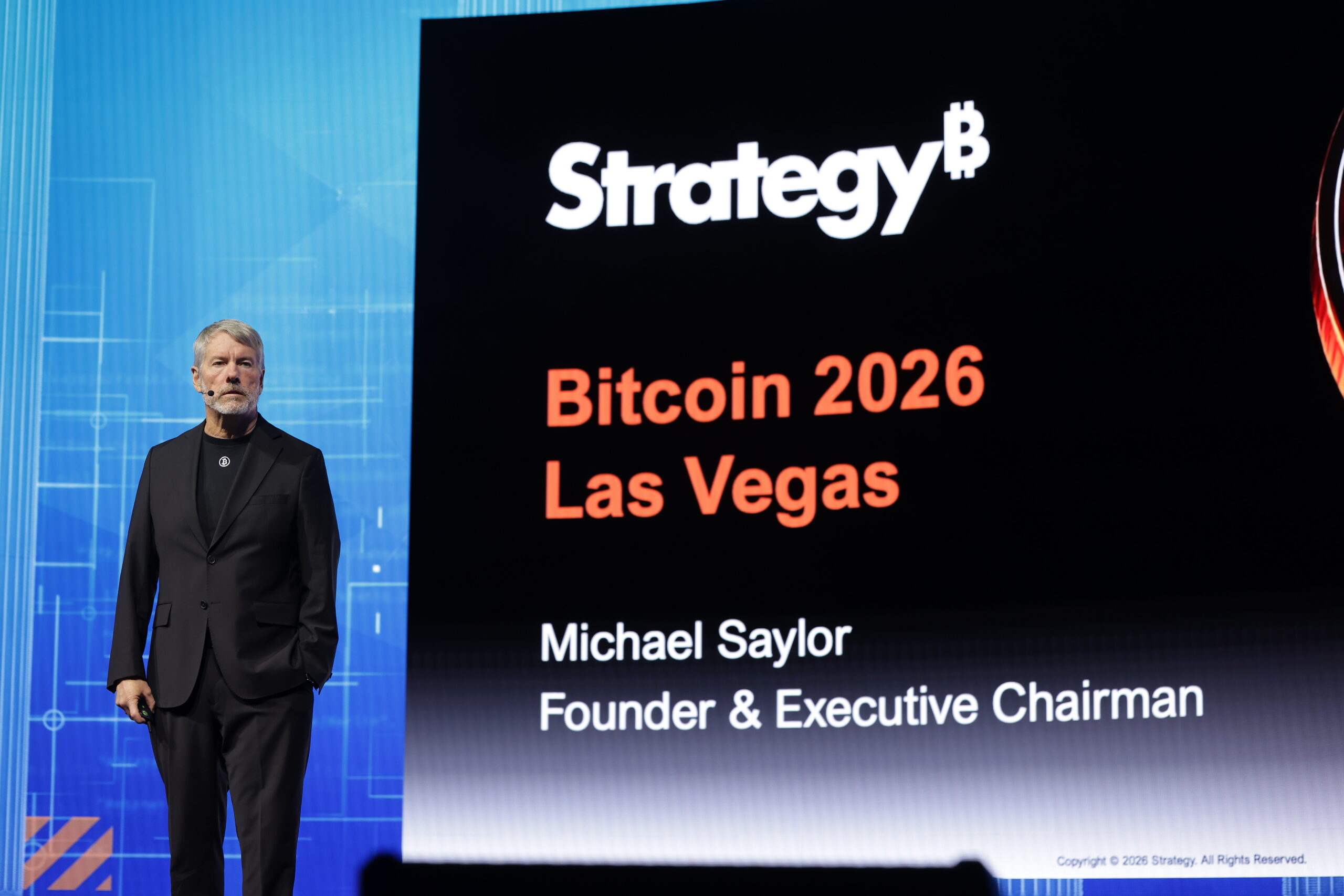
Strategy (MSTR) Stock Pops 9% As Bitcoin Price Pumps Back to $78,000
Shares of Strategy (NASDAQ: MSTR) surged roughly 9% on Friday as Bitcoin clawed back to the $78,000 level.
This movement comes just days after Executive Chairman Michael Saylor delivered a headline-grabbing keynote at the Bitcoin 2026 conference in Las Vegas.
MSTR climbed above $180 per share during Friday’s session, building on a prior close near $165. The move tracked Bitcoin’s intraday advance, which pushed BTC to $78,961 as of Friday afternoon, according to Bitcoin Magazine Pro data.
The rally is building up a welcome reprieve for MSTR investors who have endured a brutal stretch — the stock remains down more than 70% from its November 2024 all-time high above $457.
The price action comes amid a broader recovery in Bitcoin that has been grinding higher since a sharp pullback to the mid-$60,000s earlier this year. Bitcoin surged past the $78,000 mark last week as well, propelled by short liquidations and improving macro sentiment following reports of progress in U.S.-Iran diplomatic negotiations.
Polymarket contracts on May 1 BTC pricing showed 100% confidence the asset would finish in the $78,000–$80,000 range.
As a leveraged proxy for Bitcoin, MSTR tends to amplify BTC’s moves in both directions. Strategy currently holds approximately 818,334 Bitcoin on its balance sheet — roughly 3.9% of all Bitcoin that will ever exist — acquired at an average cost of around $66,385 per coin.
Saylor: Strategy’s STRC is booming
The stock pop also comes on the heels of fresh enthusiasm generated by Saylor’s keynote at the Bitcoin 2026 conference in Las Vegas last week.
Rather than focusing on Bitcoin price targets or more Bitcoin purchases, Saylor’s pitch centered on STRC — Strategy’s Bitcoin-backed preferred stock — and a sweeping thesis that digital credit is poised to cannibalize trillions of dollars in the legacy credit market.
“The world’s $300 trillion credit market is a much bigger opportunity than the world’s roughly $2 trillion Bitcoin market, and Strategy has built the first product to bridge the two,” Saylor argued during the keynote.
STRC, which pays an 11.5% monthly variable dividend and trades on Nasdaq, has grown to approximately $8.5 billion in notional value in under nine months — larger, Saylor claimed, than the entire existing universe of monthly-paying preferred securities combined.
“This is going viral,” he told the audience.
BlackRock’s iShares Preferred & Income Securities ETF has already taken a roughly $210 million position in STRC.
Saylor said STRC has financed the acquisition of approximately 77,000 BTC year-to-date in 2026, roughly ten times the net inflow of all U.S. spot Bitcoin ETFs combined over the same period.
This post Strategy (MSTR) Stock Pops 9% As Bitcoin Price Pumps Back to $78,000 first appeared on Bitcoin Magazine and is written by Micah Zimmerman.
Blockonomi
TLDR
- Financial analysts project hyperscale AI capital expenditure will surpass $1 trillion by 2027
- Total 2026 spending estimates range from $800 billion to $900 billion, representing a 67% annual increase
- Major tech players including Microsoft, Amazon, Alphabet, and Meta increased their 2026 investment forecasts following first-quarter results
- Rising component costs, particularly memory chip pricing, are fueling the expenditure surge
- Semiconductor manufacturers like Nvidia and infrastructure companies emerge as primary winners
Major technology corporations are preparing unprecedented investments in artificial intelligence systems, with financial analysts now estimating aggregate hyperscale capital spending could surpass the $1 trillion threshold in 2027.
Following first-quarter earnings reports from Alphabet, Amazon, Microsoft, and Meta, both Bank of America and Evercore placed their 2027 capex projections above the trillion-dollar mark. For 2026, estimates currently range between $800 billion and $900 billion.
Microsoft elevated its 2026 capital expenditure guidance to $190 billion, marking a 24% increase from the previous $154 billion projection. Amazon maintained its $200 billion commitment. Alphabet bumped its forecast up 4% to $185 billion, while Meta expanded its range to $125–$145 billion from the earlier $115–$135 billion estimate.
Microsoft disclosed that $25 billion of its revised capex stems directly from increased hardware component expenses. Meta’s CEO Mark Zuckerberg attributed much of the company’s spending growth to elevated memory pricing.
Meta experienced a dramatic decline in free cash flow during Q1, tumbling to $1.2 billion from $26 billion in the year-ago quarter. Jefferies analysts suggested Meta “likely remains in the penalty box pending clearer capex ROI.”
Alphabet delivered more robust performance. Cloud revenue jumped 63% year-over-year, propelling shares approximately 10% higher. Google’s contracted backlog expanded 400% annually to reach $462 billion.
AI Revenue Growth Keeps Pace with Investment
Microsoft disclosed an annualized AI revenue run-rate exceeding $37 billion, representing 123% year-over-year expansion. Amazon’s AWS division recorded its strongest growth rate in more than three years at 28%, powered by AI workload demand.
Alphabet now processes over 16 billion Gemini tokens per minute. Its search business expanded 19%, supported by AI-enhanced query capabilities.
Jefferies analysts observed that despite escalating capital expenditures, “margin leverage holds for the hyperscalers,” citing approximately $2 trillion in backlog and accelerating cloud adoption as proof of investment returns.
Semiconductor Industry Positioned for Major Gains
The infrastructure investment wave presents substantial opportunities for chip manufacturers. RBC Capital Markets identified Nvidia, Micron Technology, Marvell, Arm Holdings, and Astera Labs as particularly well-positioned companies.
Intel delivered solid Q1 results. Evercore analysts highlighted increasing demand for specialized chips including TPUs, Trainium, and Maia processors, describing the trend as a potential “CPU renaissance.”
AI infrastructure requirements are also generating double-digit expansion in wafer fabrication output, according to RBC research.
Availability of premium AI computing resources is projected to remain constrained through 2026. BofA analysts noted that robust customer commitments and strengthening free cash flow across the technology sector should sustain these unprecedented spending levels.
The post Tech Giants on Track to Invest $1 Trillion in AI Infrastructure by 2027 appeared first on Blockonomi.
Key Takeaways
- Ryan Cohen has proposed acquiring eBay for approximately $56 billion, offering $125 per share — representing a premium of roughly 20% over Friday’s closing price.
- The proposed transaction would be financed through equal parts cash and GameStop equity, backed by a committed $20 billion debt facility from TD Securities.
- Cohen has accumulated a 5% ownership position in eBay and indicates readiness to pursue a hostile takeover through direct shareholder engagement if eBay’s board refuses negotiations.
- The GameStop CEO pledges to extract $2 billion in annual cost savings within the first year and envisions creating an Amazon competitor.
- Market reaction saw eBay shares soar more than 8% in premarket Monday trading, while GameStop stock climbed over 6%.
In a bold Sunday announcement, GameStop CEO Ryan Cohen delivered an unsolicited acquisition proposal to eBay’s board of directors, offering approximately $56 billion for the online marketplace giant.
Cohen’s proposal prices eBay shares at $125 each — a significant 20% premium above Friday’s closing market price. Market participants responded enthusiastically Monday morning, pushing GameStop shares up more than 6% while eBay stock jumped over 8% in premarket activity.
The financing blueprint calls for equal components of cash and GameStop equity. According to Cohen, GameStop holds approximately $9.4 billion in cash and liquid securities as of January 31, with remaining funds sourced through debt instruments and outside capital.
GameStop Corp., GME
Supporting the aggressive proposal, Cohen has arranged a committed $20 billion debt facility through TD Securities, the investment banking arm of TD Bank. Additional financing from Middle Eastern sovereign wealth entities remains under consideration, per reporting from the Wall Street Journal.
Prior to unveiling the bid, GameStop quietly accumulated a 5% interest in eBay through direct stock purchases and derivative positions.
Cohen Signals Willingness to Launch Hostile Campaign
Cohen has indicated he won’t accept rejection without a fight. Speaking with the Wall Street Journal, he expressed readiness to bypass eBay’s board entirely — presenting the acquisition proposal directly to eBay’s shareholder base if directors refuse meaningful discussions.
Should the transaction complete, Cohen confirmed his intention to lead the merged entity as chief executive.
Cohen’s strategic vision includes eliminating $2 billion in annual operating expenses within the first twelve months post-merger. He specifically identifies eBay’s sales and marketing expenditures as ripe for significant reduction.
GameStop’s extensive network of approximately 1,600 retail locations across the United States would function as infrastructure for product authentication, order fulfillment, and live commerce operations, according to Cohen’s communication with eBay’s board.
“It could be a legit competitor to Amazon,” Cohen stated regarding the potential combined enterprise.
A Transaction Nearly Quadruple GameStop’s Valuation
The scale of this proposal is remarkable. eBay carried a market capitalization near $46 billion at Friday’s market close. GameStop’s valuation stood at approximately $12 billion. This disparity makes Cohen’s bid one of the more unusual major acquisition attempts in recent corporate history.
Cohen’s unconventional approach aligns with his established pattern — he gained national attention during the 2021 retail trading phenomenon and joined GameStop’s board that same January, subsequently ascending to the CEO role while implementing aggressive cost reductions that restored corporate profitability.
Yet GameStop’s core business continues struggling. The company disclosed a 14% year-over-year revenue decline in its fourth quarter last month. The brick-and-mortar gaming retail sector faces persistent challenges as consumers increasingly favor digital distribution.
Conversely, eBay demonstrated stronger operational momentum. Last week, the company issued second-quarter revenue guidance exceeding analyst expectations, propelled by strength in collectibles, automotive parts, and livestream auction formats.
Year-to-date performance prior to this development showed GameStop and eBay shares advancing 32.1% and 19.5% respectively.
eBay has not yet issued a statement regarding Cohen’s acquisition proposal.
The post GameStop (GME) Stock Surges 6% After Ryan Cohen’s Stunning $56B eBay Takeover Bid appeared first on Blockonomi.
news
War shock reshapes central-bank calculus: downside for growth, upside for inflation, making precautionary rate increases an option for the coming months. As for today, the ECB and Bank of England are seen keeping rates unchanged.
Meta, Amazon, Microsoft, and Alphabet earnings split tech stocks as AI spending concerns weigh on the Nasdaq 100 and shape the stock market outlook.


