Crypto & Finance RSS
Cointelegraph.com News

Solstice CEO Ben Nadareski says deeper liquidity and growing institutional participation could make future crypto bull runs less volatile than previous cycles.
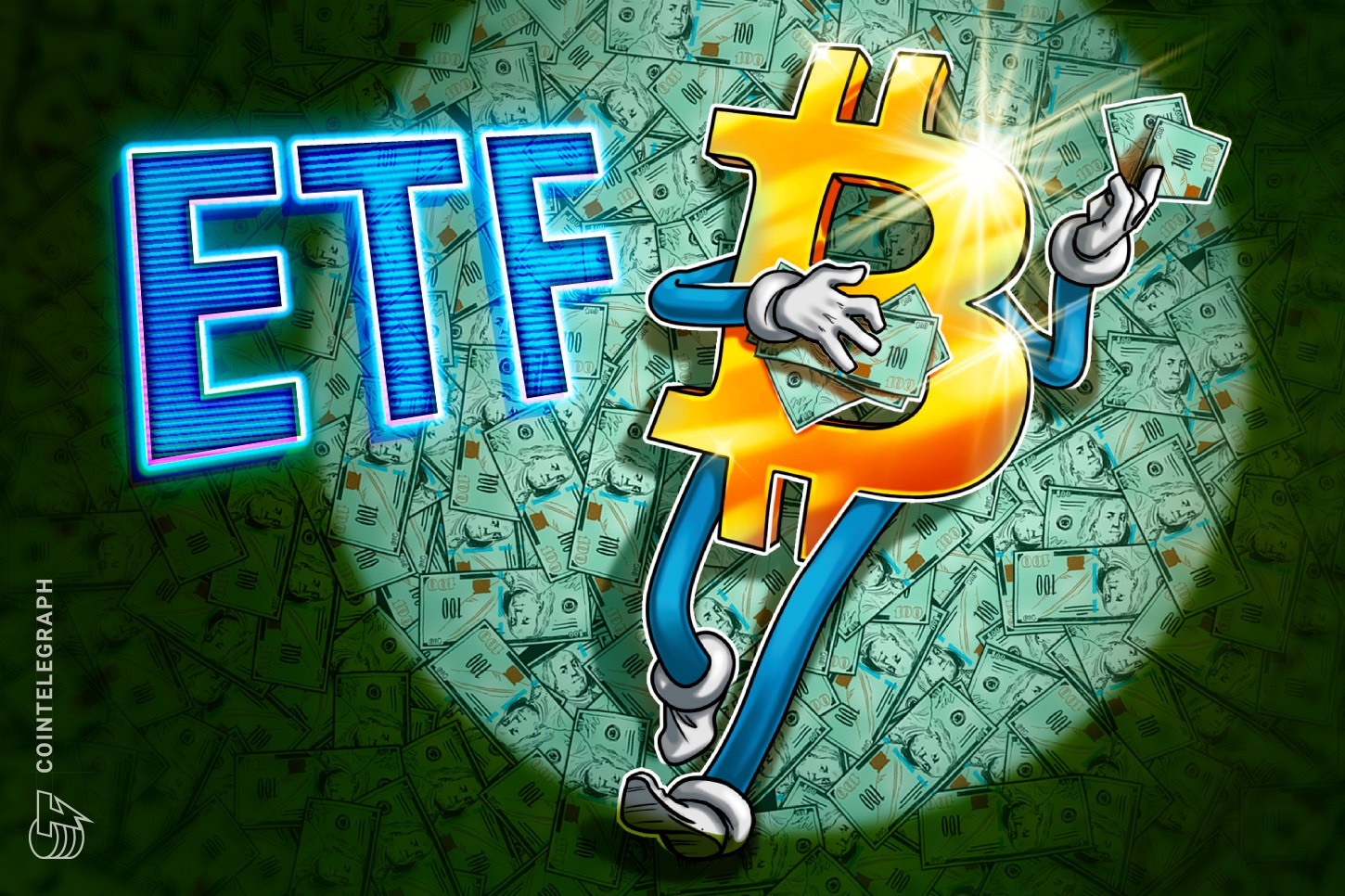
US spot Bitcoin ETFs drew nearly $1 billion on Monday, their largest daily inflow since October 2025, as Bitcoin briefly climbed above $87,000.
Bitcoinist.com
TL;DR
- Celestia has released v0.34.2-corto for celestia-node.
- The release is specifically for the Corto testnet.
- It should not be confused with a Celestia mainnet upgrade.
Celestia developers have published another update for the network’s Corto testing environment.
celestia-node v0.34.2-corto was released on September 16 as a testnet-specific prerelease for operators participating in Corto.
That last part is the important one.
This is not a Celestia mainnet upgrade.
Corto Is Where Changes Get Exercised First
Testnets exist because protocol developers need somewhere to break things safely.
Node software can behave perfectly in local testing and still run into unexpected problems once it is distributed across many machines, networks and operators.
Corto gives Celestia developers an environment to test node behavior before changes move further toward production.
The -corto suffix makes the intended audience explicit.
If you are running Celestia mainnet, this release is not automatically aimed at you.
Release Labels Matter
Crypto software releases can become confusing quickly.
A version number appears on GitHub and suddenly gets described as though an entire network has upgraded.
That is not what happened here.
This is a prerelease tied to a test environment.
For Corto node operators, it matters because keeping software aligned with the testnet is part of participating in the exercise.
For ordinary Celestia users, there is little to do.
The value is in the development process.
Testing software in a realistic environment before pushing it onto mainnet is not particularly glamorous.
It is also exactly what you want infrastructure teams to be doing.
Source: Celestia celestia-node GitHub release. https://github.com/celestiaorg/celestia-node/releases/tag/v0.34.2-corto
This article was written by the News Desk and edited by Samuel Rae.
TL;DR
- Cairo v2.19.5 has been released by Starkware.
- The update contains compiler and code-generation fixes.
- It is a developer-tooling update, not a Starknet hard fork.
Starkware has published Cairo v2.19.5, delivering another maintenance update to the language and compiler toolchain used across the Starknet ecosystem.
The release landed on September 17 through the official starkware-libs/cairo repository.
This one is best understood as developer infrastructure rather than a network upgrade.
There is no automatic Starknet hard fork attached to installing a new Cairo compiler version.
Compiler Fixes Matter Before Users Ever See Them
Smart contract languages sit several layers below the interfaces most users interact with.
But problems there can have wide consequences.
A compiler turns developer-written code into a form the network can execute.
Bugs in code generation, semantics or intermediate representations can therefore create headaches long before a contract ever reaches production.
v2.19.5 includes fixes around Sierra code generation and Cairo semantics.
Those are the kinds of changes that developers care about even if the average Starknet user never notices them.
Ideally, they should not.
The best developer-tooling updates quietly make the next generation of applications more reliable.
No Mystery Performance Number Needed
There had been some chatter attaching a specific prover-performance improvement to the release.
The actual release notes do not support that claim.
So the story is simpler.
Cairo v2.19.5 is a standard compiler update with fixes useful to developers working in the Starknet ecosystem.
That may not sound as dramatic as a double-digit performance gain.
It is also much more accurate.
Source: Starkware Cairo GitHub release. https://github.com/starkware-libs/cairo/releases/tag/v2.19.5
This article was written by the News Desk and edited by Samuel Rae.
NewsBTC
TL;DR
- REX Shares has launched the T-REX 2X Long Strive Daily Target ETF under ticker ASSX.
- The fund seeks 200% of the daily performance of Strive Asset Management stock.
- ASSX is a leveraged single-stock ETF, not a spot Bitcoin ETF.
Investors now have a leveraged ETF tied to one of the public companies building a large Bitcoin treasury.
REX Shares has launched the T-REX 2X Long Strive Daily Target ETF, trading under ticker ASSX, with an objective of delivering 200% of the daily performance of Strive Asset Management shares.
ASSX Adds Leverage On Top Of A Bitcoin Treasury Stock
Strive’s own balance sheet holds 26,355 BTC, making its equity sensitive to both its operating business and the market value of its Bitcoin treasury.
ASSX takes that equity exposure and adds daily leverage.
That is materially different from owning Bitcoin directly. It is also different from holding a spot Bitcoin ETF.
The fund tracks Strive stock, not BTC, and its 2x objective resets daily. Over periods longer than one day, compounding and volatility can cause returns to diverge significantly from simply doubling Strive’s longer-term stock performance.
Bitcoin Treasury Equities Keep Spawning New Products
As more public companies adopt large crypto treasuries, the equities themselves are becoming building blocks for additional financial products.
ASSX is an example of that second-order market.
Investors who want amplified daily exposure to Strive can now access it through an exchange-traded product, but they are taking on the risks of leverage, single-stock concentration and Strive’s corporate structure at the same time.
The listing should therefore be understood as a 2x leveraged ETF on ASST shares.
It is not a leveraged spot-Bitcoin product, even though Bitcoin remains a major driver of the underlying company’s investment narrative.
This article was written by the News Desk and edited by Samuel Rae.
TL;DR
- Bitwise filed a post-effective amendment updating disclosures for its XRP ETF trust.
- The September 21 filing registered zero new shares.
- The filing is a prospectus update, not an SEC approval notice or a new ETF launch.
Bitwise has filed an updated prospectus for its XRP exchange-traded fund trust, adding another SEC filing to the product’s regulatory record.
The September 21 submission was made on Form POS AM, a post-effective amendment used to update registration-statement disclosures.
What The Bitwise XRP Filing Actually Does
The filing is notable because XRP ETF paperwork continues to draw heavy attention, but the procedural status matters.
Bitwise registered zero new shares in this amendment.
That means the filing should not be treated as evidence that the SEC has newly approved the product, nor does it establish that a commercial launch happened on September 21.
Instead, the amendment updates prospectus material tied to the trust.
For investors following the ETF process, these filings can still be useful because they show that issuers are continuing to maintain and refine registration documents while regulatory and operational work progresses.
XRP ETF Headlines Need Procedural Precision
Crypto ETF filings often move through several stages: initial registration documents, amendments, exchange filings, effectiveness, launch preparation and eventual trading.
Those stages are not interchangeable.
In this case, the verified event is a Bitwise POS AM filing concerning its XRP ETF trust.
The document does not support describing the fund as newly approved, and it does not show that new shares were registered in this specific filing.
The broader XRP ETF story may continue to develop, but the September 21 event is best understood as a prospectus update inside that process rather than a final regulatory green light.
This article was written by the News Desk and edited by Samuel Rae.
HTTP error 429 on https://cryptopotato.com/feed
Failed to fetch feed: https://cryptopotato.com/feed
Failed to fetch feed.
99Bitcoins
ZetaChain (ZETA) tokenholders approved a plan to wind down the project’s Cosmos-based Layer 1 blockchain and migrate its native ZETA token to Solana, with governance Proposal 68 passing at 99.4% support and 58% participation, according to the primary source material. That turnout cleared the network’s 40% quorum requirement by a wide margin.
The vote does not switch off ZetaChain overnight. Core contributors must still submit a second proposal defining the shutdown timetable, and until that proposal passes, the existing Layer 1 keeps running.
What the ZETA migration changes – and what it does not
Under the approved plan, ZETA is set to become an SPL token on Solana through a 1:1 conversion, keeping the same ticker and total supply, according to the source. No new tokens would be created in the process.
A second governance proposal still has to nail down the mechanics: the snapshot block height used to calculate balances, the withdrawal window for assets tied to other chains, the shutdown timetable itself, the token-claim process, and the exchange conversion period. Validators will keep operating, and staking rewards will continue through the transition, per the source.
Worth noting: the current proposal specifically covers ZETA native to ZetaChain. ZETA has already been issued on Ethereum, and BNB Smart Chain sits outside its scope. Anyone tracking Solana’s broader infrastructure push might also look at the recent Solana slot-time upgrade, since network performance is part of ZetaChain’s pitch for the move.
DISCOVER: 10+ Next Crypto to 100X In 2026
Why ZetaChain is leaving its own chain for AI
ZetaChain launched in 2021 as an interoperability project built to connect assets and data across different blockchains, and raised $27 million in 2023 from investors including Blockchain.com, Jane Street Capital, Human Capital, and Sky9 Capital to build out that Layer 1. Four years later, the project says running its own Cosmos SDK-based chain no longer serves its current priority: Anuma, a privacy-focused AI application, and the Private Memory Layer underneath it.
ZetaChain describes the Private Memory Layer as letting users carry encrypted context across different AI models – a company claim about the product’s design rather than an independently verified security audit. The project reports more than 300,000 Anuma users and over one million requests processed across 35 AI models, figures attributed to ZetaChain’s own published data. Shifting resources away from blockchain maintenance and toward that application is the stated rationale for the migration.
DISCOVER: 15+ Upcoming Coinbase Listings to Watch in 2026
The security and maintenance case behind the wind-down
ZetaChain’s proposal points to the operational burden of running Cosmos SDK infrastructure, including coordinating upstream software upgrades and security patches across its validator set. It cites an Aug. 25 Cosmos EVM security response as an example of that ongoing work – though ZetaChain itself was not named among the networks exploited in that incident.
The project has its own security history to reckon with. ZetaChain suffered a reported $334,000 exploit in April targeting its cross-chain gateway contract, and later acknowledged dismissing an earlier bug bounty report about the vulnerability as intended behavior – a lapse that prompted a review of its security processes.
DISCOVER: 9+ Best Memecoin to Buy in 2026
Part of a wider pattern of Layer 1 exits
ZetaChain isn’t alone in walking away from a standalone chain. BounceBit retired its own Layer 1 in August after an authorization flaw let attackers steal roughly $3 million in BB tokens, migrating to BNB Smart Chain at a 1:1 ratio instead of rebuilding. Harmony proposed a similar exit on Sept. 6, planning to move its ONE token to Ethereum as an ERC-20 alongside a pivot toward AI video, following an exploit that forced a rollback of more than 109,000 transactions.
Those cases don’t prove every standalone chain is doomed, but they do show a pattern of projects concluding that maintaining independent consensus is no longer worth the cost when a larger ecosystem – often Solana or Ethereum – can carry the token instead. For traders watching what a Solana-based application economy actually looks like, Jupiter’s recent Lend v2 smart collateral rollout is a useful reference point for the kind of DeFi activity ZETA would be entering alongside.
DISCOVER: 16+ New and Upcoming Binance Listings in 2026
The post A New Home on Solana: ZETA Migration Wins 99.4% Vote appeared first on 99Bitcoins.
The Pi crypto Network says it has resolved two long-standing bottlenecks affecting more than 914,000 Pioneers stuck in its KYC (know-your-customer identity verification) and Mainnet migration pipeline, according to an official blog post the Pi Core Team published last Friday (September 18).
Of that total, more than 417,000 accounts previously flagged for possible duplication can now move forward in the KYC process after further evaluation confirmed they were not duplicates, while a separate group of 497,000 Fast-Track wallet users is scheduled to be unblocked by an update the team says will deploy within the next week.
Pi KYC and Mainnet migration received several technical updates that address corner cases and help unblock more Pioneers in these processes!
Go to the Pi app to learn more! pic.twitter.com/9I8F4HpNBx
— Pi Network (@PiCoreTeam) September 17, 2026
Neither fix amounts to automatic final approval. Pi Network is explicit that the duplicate-account resolution does not replace other applicable KYC requirements, meaning those 417,000 users must still clear whatever checks remain before their status is fully verified.
This positive news dropped as PI crypto began the week with a +4.8% move over the past 24-hours. However, the token is still down 9% over the past seven days, so the bullish daily move is only the first step in reversing the token’s fortunes. Even more worrying, PI is down -75% year-to-date.
PI Crypto News: What Did the Fix Actually Change for the Stuck Users?
The first fix targets Pioneers whose accounts were caught in a duplicate-account review, one of several corner cases built into Pi’s verification system to separate genuine users from bots and bad actors.
After further evaluation, Pi Network determined the flagged accounts were not duplicates, clearing the way for those users to continue through KYC.
The second fix addresses a more technical snag. Some Pioneers received their Mainnet wallet through Pi’s Fast-Track process, which later doubled as the destination wallet for their Mainnet migration balance.
Because those wallets were not created through the standard KYC-and-migration route, many lacked enough PI token in balance to cover the gas fee required to claim the migrated funds.
The upcoming update is designed to close that gap between the two KYC routes and prevent the same issue from recurring in future cases.
Discover 800+ Trading Pairs You Can Trust With KrakenAdditional Fixes Layered Into the Same Update
Alongside the two headline fixes, Pi Network rolled out several smaller technical changes. The KYC app now manages system resources more efficiently during machine-learning-based video processing, which the team says should reduce errors that previously caused applications to stall.
Pioneers who got stuck under the earlier Yoti verification process due to missing liveness-check data can now resubmit their applications, and liveness-check logic has been adjusted to work on older or lower-spec devices that previously failed the check.
Pi is also running a one-month gradual trial of palm-print capture for some users required to complete multiple liveness checks, framed as an added layer of human-authenticity verification that does not require showing a face.
Separately, Indonesian users rejected for submitting a KIA identity document, which Pi no longer accepts for KYC, can resubmit using another supported ID.
Make Your Prediction With $25 Free on KalshiPi Network completes last step towards Protocol v27 Launch
Pi Network (@PiCoreTeam) is moving to Protocol V27 on its Testnet 2 environment as it works toward a mainnet launch.
The new protocol has stabilized at 250 transactions per block with no recorded failures, showing it… pic.twitter.com/zrZylCQNGj
— BSCN (@BSCNews) September 21, 2026
Why Pi Handles Fixes in Batches
Pi Network’s KYC and Mainnet migration system runs multiple layered checks meant to let genuine Pioneers through while filtering out bots, duplicate accounts, and policy violators.
When a specific corner case blocks a group of users, Pi says it requires custom technical solutions that get developed, tested, and released before that batch can move forward, which is why unblocking tends to happen in waves rather than continuously.
For readers tracking the network’s broader roadmap, recent coverage of Pi Network’s v27 protocol upgrade and Mainnet developments offers additional context on where migration fits into the network’s wider technical push.
DISCOVER: Top Solana Meme Coins to Buy in 2026
Follow 99Bitcoins on X For the Latest Market Updates and Subscribe on YouTube For Daily Expert Market Analysis.
The post Pi Network Clears 417,000 KYC Flags as PI Crypto Price Surges +5% appeared first on 99Bitcoins.
Crypto Briefing
The stress-induced leave at AISI highlights the urgent need for sustainable work practices in high-stakes AI safety evaluations.
The post UK’s AI Safety Institute staff take leave for stress amid scrutiny appeared first on Crypto Briefing.
Verda's expansion could challenge US cloud giants, promoting European data sovereignty and boosting green tech adoption globally.
The post Verda raises $189M to expand AI cloud infrastructure across Europe and beyond appeared first on Crypto Briefing.
crypto.news
Coldcard whitehats moved 52.37 BTC from exploit-linked wallets into a recovery trust that will verify claims from affected owners.
Hana Bank has signed an agreement with Upbit Global to develop Travel Rule infrastructure for digital asset transfers, extending its work with South Korea’s crypto sector into transaction compliance and transfer technology. DigitalToday reported on Sept. 22 that the two…
Coinlabz
The post How to accept cryptocurrency payments in WordPress? appeared first on Coinlabz.
Discovering Gekko HQ Crypto feels like stepping into a world bursting with fresh ideas and cutting-edge tactics in the…
The post What Is Gekko HQ Crypto appeared first on Coinlabz.
BitRss - Crypto World News
ChainCatcher 消息,据 Coinglass 数据显示,Binance 在过去 1 小时内净流出 1.82 亿 USDT。
Bad actors targeted Polymarket’s U.S. platform in a $10 million fraud scheme using stolen debit cards, pushing payment processor Checkout.com to reject over 80% of deposits as fraudulent. High Rejection Rates Trigger Payment Processor Crackdown Prediction-market startup Polymarket faces...
https://dumbbell-exercises.com/

The post บาคาร่าออนไลน์ เว็บตรง อันดับ 1 เล่นบาคาร่าสด ปลอดภัย จ่ายจริง appeared first on https://dumbbell-exercises.com/.

The post บาคาร่าทุนน้อย เล่นยังไงให้ได้กำไร รวมเทคนิคทำเงินที่มือใหม่ต้องรู้ appeared first on https://dumbbell-exercises.com/.
Bitcoinik

BNB has remained one of the strongest large-cap assets in the crypto market, with the token recently trading around the $600–$610 area. The short-term structure has been relatively constructive, although BNB is now approaching an important resistance zone where buyers will need to demonstrate stronger momentum. Recent market data places resistance around $615–$620, while the $600 area has emerged as an important psychological and technical support level. (CoinStats)
Beyond price action, BNB has an increasingly important fundamental story. BNB Chain continues to expand across decentralized finance, stablecoins, real-world assets and artificial-intelligence applications, while the network’s 2026 roadmap focuses on improving speed, efficiency, security and scalability. (BNB Chain)
BNB Price Action: Bulls Face a Key Test
BNB’s recent movement has been relatively measured rather than explosive. After recovering toward the $600 region, the token has been consolidating close to resistance.
The immediate technical picture can be divided into three important zones:
Resistance: $615–$620
A decisive breakout above this area would improve the short-term structure and could attract momentum buyers. The most important factor would be confirmation through stronger trading volume rather than a brief intraday move above resistance.
Support: $600–$603
The $600 region is currently an important psychological level. Holding above it would suggest that buyers continue to defend the recent recovery. Recent market analysis has identified roughly $603–$605 as near-term support. (CoinStats)
Deeper support
If BNB loses the $600 area decisively, traders could start looking toward lower support zones. A sustained breakdown would weaken the current recovery structure and could lead to additional profit-taking.
For now, the market remains in a battle between buyers attempting to push BNB higher and sellers defending the $615–$620 region.
BNB’s Recent Performance
Recent market data shows BNB has been relatively resilient compared with several major altcoins. One recent report noted that BNB had gained roughly 8% over seven days, supported by increased activity on BNB Smart Chain and growing DeFi adoption. (CryptoRank)
Another recent market update showed BNB around $602, with the token having gained approximately 1.9% over seven days at that point. The pullback was attributed partly to broader crypto-market liquidations and leveraged long unwinding. (tradingkey.com)
This is important because BNB’s recent behavior suggests that buyers remain interested, but the market is not yet experiencing the kind of aggressive momentum that would make a breakout certain.
BNB Chain Fundamentals Continue to Expand
One of the strongest arguments for BNB comes from the activity taking place on its underlying ecosystem.
BNB Chain currently reports approximately 2.85 million daily active users, around $4.87 billion in total value locked, roughly $2.5 billion in trading volume, and very low average gas costs on its ecosystem dashboard. (BNB Chain)
These numbers highlight an important part of the BNB investment thesis: the token is not supported only by exchange-related demand. BNB is also deeply integrated into an expanding blockchain ecosystem.
BNB is used for transaction fees, ecosystem applications, staking-related functions and other activities across BNB Chain. As network usage expands, demand for the underlying ecosystem can become increasingly important for the long-term value proposition of the token.
Real-World Assets Are Becoming an Important Growth Area
Real-world assets are another area where BNB Chain has been gaining traction.
Recent reports indicate that the number of wallets holding tokenized real-world assets on BNB Chain has surpassed 300,000. This represents a significant milestone for the network’s RWA ecosystem and shows that blockchain adoption is expanding beyond traditional crypto-native applications. (Altcoin Buzz)
The growth of tokenized assets could become increasingly important over the next several years.
If more traditional financial assets move on-chain, networks that can provide inexpensive transactions, deep liquidity and high throughput could benefit from this expansion. BNB Chain is positioning itself to compete for that activity.
AI Is Another Major BNB Chain Narrative
Artificial intelligence has become one of the biggest themes across crypto, and BNB Chain is increasingly targeting this sector.
According to BNB Chain, more than 200,000 AI agents were registered on BNB Smart Chain under the ERC-8004 standard as of July 2026. The network says this represented roughly 60% of registered agents across 26 networks at that time. (BNB Chain)
The ecosystem is also working on an AI-agent marketplace designed to improve the discoverability and usability of these applications.
This could become a significant long-term narrative for BNB if AI agents begin generating meaningful on-chain transaction activity.
However, investors should distinguish between registration numbers and actual economic activity. A large number of AI agents does not automatically mean equivalent demand for BNB. Sustained user activity, transactions, fees and liquidity will ultimately matter more.
BNB Chain Is Preparing for More Scaling
BNB Chain’s 2026 technical roadmap places significant emphasis on scalability, efficiency and reliability.
The network has stated that its 2025 performance was built around priorities including speed, cost efficiency, reliability and fairness, while continuing to support growth in areas such as trading, stablecoins and real-world assets. (BNB Chain)
The broader roadmap also includes efforts to increase throughput and improve the handling of application traffic.
Separately, BNB Chain is developing a new Layer-1 architecture designed specifically for agentic trading, with a target of sub-50-millisecond transaction preconfirmation and no public mempool. The project is targeting a testnet toward the end of 2026 and mainnet deployment in early 2027. (The Block)
If successfully delivered, this could position the BNB ecosystem for a new category of high-frequency, AI-driven on-chain applications.
Security Is Becoming a Bigger Focus
Security remains one of the most important issues for any blockchain ecosystem.
BNB Chain recently expanded its AvengerDAO security program, bringing together 11 security firms and offering services covering security assessments, monitoring, incident response and bug bounties. (BNB Chain)
This is more important than it may initially appear.
As BNB Chain attracts more capital, stablecoins, tokenized assets and applications, the cost of security failures becomes increasingly significant. Stronger security infrastructure can help improve confidence among developers, users and institutional participants.
A safer ecosystem does not guarantee a higher BNB price, but it can strengthen the network’s long-term fundamentals.
The Upcoming Pasteur Hard Fork
Another development traders are watching is the planned Pasteur hard fork.
Recent reports indicate that the upgrade is expected around August 25, 2026, with improvements aimed at areas including bridge security and validator-related controls. (CryptoRank)
Network upgrades can create short-term interest in a token because traders often anticipate improved functionality and ecosystem growth.
However, the actual long-term impact will depend on implementation and adoption. An upgrade is fundamentally bullish only if it translates into better network performance, greater usage and stronger economic activity.
BNB Supply and Demand
BNB’s supply dynamics are another important part of the story.
BNB has a long-standing token-burn mechanism that removes tokens from circulation over time. At the same time, BNB is required across various parts of the Binance and BNB Chain ecosystem.
This creates an interesting supply-demand structure.
If ecosystem usage grows while the effective supply continues to be reduced through burns, the fundamental setup can become increasingly supportive over the long term.
Still, token burns should not be viewed in isolation. Price ultimately depends on the balance between actual demand, circulating supply, market liquidity and investor sentiment.
What Could Trigger a Bullish Breakout?
From a technical perspective, the first major confirmation would be a sustained move above the $615–$620 resistance zone.
A convincing breakout would ideally come with:
- Strong spot trading volume
- Increasing open interest without excessive leverage
- Continued BNB Chain activity
- Strength across the broader altcoin market
- Bitcoin maintaining a stable or bullish structure
If these conditions align, BNB could enter a stronger momentum phase.
The market would then begin looking toward higher resistance levels rather than repeatedly testing the $600 region.
What Could Turn the Structure Bearish?
The biggest short-term warning sign would be a decisive breakdown below $600.
A failure to hold this psychological level could indicate that sellers are gaining control. The risk would become greater if the breakdown occurs alongside rising volume and broad weakness across the cryptocurrency market.
Another risk is excessive leverage.
Recent data has shown that leveraged positioning can contribute to sharp BNB pullbacks when traders are forced to close long positions. (tradingkey.com)
Therefore, even if the broader fundamentals remain positive, BNB can experience significant short-term volatility.
BNB vs. the Broader Crypto Market
BNB’s performance should also be evaluated relative to Bitcoin and Ethereum.
Bitcoin continues to dictate much of the overall direction of the crypto market. When BTC enters a strong uptrend, capital generally becomes more willing to rotate into large-cap altcoins.
BNB can benefit from this environment because it combines large market capitalization with an active blockchain ecosystem.
However, if Bitcoin experiences a sharp correction, even strong BNB fundamentals may not be enough to prevent short-term selling.
This is why the BTC trend remains one of the most important external variables for BNB.
BNB Outlook
The current BNB setup can best be described as constructive but awaiting confirmation.
The $600 region remains an important support area, while $615–$620 is the key short-term resistance zone. A breakout above resistance with strong volume would significantly improve the bullish case.
At the fundamental level, the picture is encouraging. BNB Chain is expanding across DeFi, real-world assets and AI applications, while continuing to work on scalability and security. The network is also preparing for additional technical upgrades and a longer-term architecture designed for emerging use cases such as agentic trading. (BNB Chain)
The challenge is converting ecosystem growth into sustained demand for BNB.
Final Thoughts
BNB is entering an interesting phase.
The token is trading near a critical technical area, while the underlying BNB Chain ecosystem continues to expand. Network activity, RWA adoption, AI development, security improvements and upcoming infrastructure upgrades provide several potential catalysts for the long-term story.
In the short term, however, price action remains king.
A clean breakout above $615–$620 could signal that buyers are ready to push BNB into a new upward phase. Conversely, losing the $600 support zone would weaken the setup and could trigger another round of selling.
For traders, the most important things to watch are $600 support, $615–$620 resistance, volume, leverage and Bitcoin’s overall direction.
For long-term investors, the bigger question is whether BNB Chain can continue turning its growing user base, DeFi activity, RWA adoption and emerging AI ecosystem into sustainable economic demand.
BNB remains one of the most important large-cap altcoins to watch, but the next major move will need confirmation from both price and fundamentals.
This article is for educational and informational purposes only and is not financial advice. Cryptocurrency prices are highly volatile, and market conditions can change rapidly.

Ethereum (ETH) remains one of the most closely watched assets in the cryptocurrency market. After a period of significant volatility, ETH has been attempting to stabilize and rebuild momentum. Recent market data places ETH around the $1,900 area in early August, although intraday prices can move quickly in the crypto market. (Reddit)
ETH Price Structure
The recent price action suggests that Ethereum is trying to establish a base after its earlier decline. ETH has been trading in a relatively tight range around the $1,900–$1,915 region in recent sessions, with trading activity moderating compared with the stronger volumes seen during previous moves. (Reddit)
For bulls, the most important development would be a sustained move above the recent resistance zone. A breakout supported by stronger volume could signal that buyers are gaining control and potentially open the door toward higher resistance levels.
On the other hand, failure to hold the current trading range could bring renewed selling pressure. Traders should therefore focus on confirmation rather than assuming that every short-term bounce represents the beginning of a major rally.
Why ETH Has Struggled
Ethereum has faced several challenges during this market cycle. ETH has underperformed Bitcoin significantly, while the ETH/BTC ratio has remained under pressure. Earlier research highlighted that Ethereum’s drawdown from its 2025 high was considerably larger than Bitcoin’s, showing how much weaker ETH’s relative performance had become. (DHLm Studio)
One important issue is value capture. Ethereum’s Layer-2 ecosystem has expanded rapidly, but greater activity on Layer-2 networks can also reduce the amount of activity and fees directly captured by Ethereum’s mainnet.
At the same time, this scaling strategy has produced major benefits for users. Research published in 2026 found that Ethereum’s upgrades had substantially increased throughput across the mainnet and Layer-2 ecosystem while median transaction fees had fallen sharply. (arXiv)
This creates an interesting long-term trade-off: Ethereum is becoming cheaper and more scalable, but investors are still assessing how that growth translates into value for ETH itself.
Network Fundamentals Remain Important
Ethereum’s investment case is not based purely on price speculation. The network remains a major infrastructure layer for decentralized finance, stablecoins, tokenized assets and smart contracts.
Network revenue data also shows that stablecoin transfers remain an important source of Ethereum activity. A 2026 market review found that stablecoin transfers represented the largest share of Ethereum Layer-1 revenue among the sectors analyzed. (Kraken)
This matters because sustained real-world usage can provide a stronger foundation for ETH demand than speculative trading alone.
Institutional and Corporate Demand
Another factor worth watching is institutional exposure to ETH.
Corporate Ethereum holdings grew substantially during 2025, with companies building ETH treasury strategies and treating the asset as a longer-term balance-sheet holding. (Business Standard)
The thesis is different from simply holding cash. ETH can potentially provide staking rewards while also giving institutions exposure to Ethereum’s broader ecosystem.
However, corporate accumulation should not automatically be interpreted as a guarantee of higher prices. These strategies can change with market conditions, financing costs and investor sentiment.
Key Levels to Watch
From a technical perspective, ETH traders should focus on three broad areas:
1. Current support zone
The $1,900 region has recently acted as an important area of price consolidation. Holding this zone would help maintain the short-term recovery structure.
2. Psychological resistance
The $2,000 level is an important psychological barrier. A convincing move above it could improve market sentiment and attract additional momentum traders.
3. Higher resistance
If ETH successfully breaks above $2,000 and establishes support there, the market could begin testing higher resistance zones. The strength of volume will be important because a breakout without meaningful participation can quickly turn into a false move.
What Could Turn ETH Bullish?
Several factors could strengthen the bullish case:
- ETH reclaiming major resistance levels
- Rising spot trading volume
- Stronger ETH/BTC performance
- Sustained institutional demand
- Growth in DeFi and stablecoin activity
- Continued Ethereum scaling improvements
- A broader recovery across the cryptocurrency market
A combination of these factors would provide a much stronger signal than price appreciation alone.
What Could Keep ETH Under Pressure?
There are also several risks.
Bitcoin continues to influence the direction of the broader crypto market, meaning a major BTC correction could put pressure on ETH regardless of Ethereum’s own fundamentals.
Ethereum also faces intense competition from other blockchain ecosystems. Lower transaction costs and faster networks are positive for users, but Ethereum must continue attracting developers, liquidity and applications to maintain its position.
Finally, macroeconomic conditions remain important. Higher interest rates, tighter liquidity and weaker risk appetite can reduce demand for volatile assets such as cryptocurrencies.
ETH Outlook
Ethereum’s current setup is best viewed as a recovery attempt rather than a confirmed new bull trend.
The recent stabilization around the $1,900 area is encouraging, but ETH needs to reclaim important psychological and technical resistance with stronger volume before the bullish case becomes more convincing.
The most important question is not simply whether ETH can move higher for a few days. The bigger question is whether Ethereum can convert its growing ecosystem, scaling improvements and institutional interest into sustained demand for ETH.
If buyers successfully reclaim major resistance and the broader crypto market remains supportive, ETH could enter a stronger recovery phase. If resistance continues to hold and volume remains weak, consolidation or another retest of lower support levels remains possible.
Final Thoughts
Ethereum remains one of the most important assets in the digital-asset ecosystem, but its price recovery faces both opportunities and challenges.
The short-term picture depends heavily on price structure, volume and Bitcoin’s direction. The longer-term picture depends on Ethereum’s ability to maintain its dominance in DeFi, stablecoins, tokenization and smart-contract infrastructure while ensuring that network growth translates into meaningful value for ETH.
For traders, the key is confirmation. For long-term investors, the more important story may be whether Ethereum’s expanding ecosystem can continue generating sustainable demand over time.
As always, cryptocurrency markets are highly volatile, and technical levels can change quickly. This article is for educational purposes and should not be considered financial advice.
Crypto News Alerts: Bitcoin, Ethereum & Cryptocurrency News
The new report maps the illicit and legitimate uses of crypto privacy tools, drawing on data from TRM Labs, Chainalysis, the RAND Corporation, the United Nations Office on Drugs and Crime (UNODC), Statista, and U.S. Treasury Department disclosures. It argues that the current regulatory focus is aimed at the wrong layer of the transaction stack.
In early 2026, Polygon Labs announced $250 million in acquisitions of Coinme and Sequence to expand its stablecoin payments infrastructure. Coinme provides licensed US fiat on- and off-ramps with a nationwide retail footprint, while Sequence adds enterprise wallet infrastructure and one-click cross-chain transaction capabilities. Together, these additions strengthen Polygon’s position in regulated, production-grade stablecoin payments.
The Coins Post
Caroline Crenshaw’s departure from the SEC on January 2 marks a turning point for crypto regulation in Washington. The longtime cryptocurrency skeptic’s exit leaves the commission operating under a 3-0 Republican majority—a historic shift that clears the way for Paul Atkins’ pro-innovation agenda to move forward without meaningful internal opposition.
What Changed at the SEC
Crenshaw spent over a decade at SEC agency, consistently raising concerns about cryptocurrencies, digital assets and investor protection.
Her exit coincides with the broader regulatory reorganization under the Trump administration, which has explicitly positioned itself to make the U.S. the “crypto capital of the world.”
The commission now operates with fewer members than authorized, as Trump hasn’t yet filled the vacant seats—a strategic pause that effectively gives the Republican-majority commissioners free rein on policy.
Why This Matters Right Now
The timing couldn’t be sharper. SEC Chair Paul Atkins has already signaled plans to introduce an “innovation exemption” that would let crypto startups test new products under lighter regulatory requirements, provided they meet basic consumer protections. [3][7] That proposal was expected within 30 days of December 2, meaning it could arrive any moment. With Crenshaw gone, there’s no institutional voice pushing back on the exemption’s scope or implementation details.
The broader regulatory picture is also shifting. The Senate is scheduled to hold hearings in January on the CLARITY Act—landmark legislation designed to end years of turf warfare between the SEC and CFTC by clearly dividing jurisdiction over different crypto products. [3][7] White House crypto adviser David Sacks said in December the bill is “closer to passage than at any point in the past.” [3] These aren’t minor procedural tweaks. They represent a fundamental reordering of how Washington approaches digital assets.
What’s Next
The real action starts immediately. Watch for the innovation exemption announcement—it could drop with minimal fanfare. Then track the Senate hearings on CLARITY in January. If that bill moves to a floor vote and passes, the crypto industry will have concrete answers about regulatory jurisdiction for the first time in years. Markets have been pricing in regulatory clarity for months. Crenshaw’s departure removes one of the last obstacles to delivering on it.
The post SEC’s Pro-Crypto Shift Accelerates as Key Skeptic Crenshaw Exits appeared first on The Coins Post.
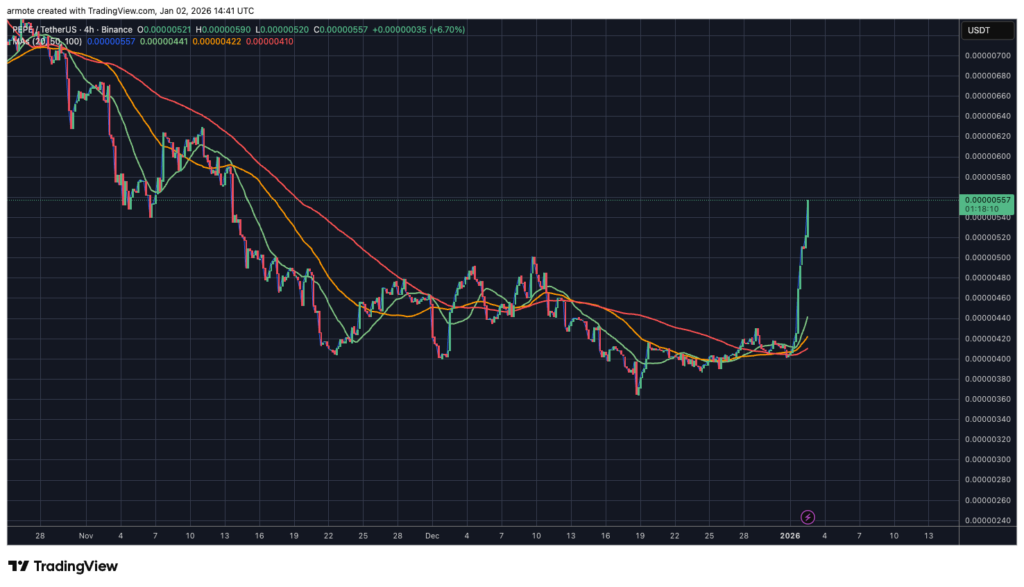
PEPE just ripped 26% higher on January 2, hitting $0.000005106 as trading volume exploded past $800 million.
That’s no thin pump—retail’s back, Robinhood holders sitting on 8.3% of supply, and a Hyperliquid whale named James Wynn dropped a bombshell prediction: $69 billion market cap by end-2026. If you’re trading memes, this is your wake-up call. Why now? New year FOMO meets bold calls in a market where BTC chills at $88k.
On-Chain Breakdown
PEPE’s ERC-20 on Ethereum. No fancy DeFi twist here—just pure meme liquidity. Volume spiked 370-400% in 24 hours, open interest jumped 82% to $446.5 million on derivatives. RSI hit 67, screaming bullish momentum after breaking $0.0000042 resistance.
Whales aren’t dumping. That official “We ride at dawn” tweet lit socials on fire—crypto Twitter’s buzzing. Supply’s fixed at 420.69 trillion tokens. If Wynn’s right, that’s $0.000164 per PEPE. Math checks out. But Ethereum gas? Still a killer for small trades.
Market Mayhem
Total crypto cap up 1.07% to $2.99T. BTC +1.21% at $88,765, dominance slipping to 59.22%—alts eating its lunch. PEPE led top gainers, outpacing Story (+25%) and Mog. Volumes hit $164B market-wide. No massive liqs reported, but meme sector OI surging means leveraged degens are in.
BTC’s post-halving year ended red for first time ever—down 6% in 2025 despite $126k ATH. ETFs pulled $348M, but macro liquidity rules now. PEPE doesn’t care—it’s riding retail hype while big boys consolidate.
Reactions Pour In
James Wynn, that Hyperliquid ser, straight-up said PEPE hits top meme status like SHIB did last cycle—if bull market holds. “We ride at dawn” from @pepe went viral. Community’s pumping: “PEPE to the moon” threads everywhere. No official team—it’s anon dev vibes.
Exchanges? Volumes exploding on Binance, MEXC. No rugs spotted. Traders on X calling for $0.000026 ATH retest. Sarcasm alert: Great timing for memes while BTC whales accumulate quietly. Holders care about flips, not halving myths.
But is this sustainable? Meme pumps fade fast.
Security Smarts for Degens
Don’t get rekt. PEPE’s been rugged before—no premine, but watch whale wallets. Use hardware for big bags; software wallets fine for sub-$1k. Check Etherscan for suspicious transfers. Avoid leverage over 5x—OI spike means liqs incoming on pullbacks.
Actionable: Set stops below $0.0000042. DCA if you believe Wynn. DYOR on Hyperliquid perps for leverage without CEX KYC. Phishing’s rampant post-pumps—double-check links. If you’re aping memes, keep it under 5% portfolio. Skin in the game matters, but don’t YOLO rent money.
Eyes on This
$0.000005 close today flips structure fully bullish. Watch BTC dominance drop—alts feast. Wynn’s $69B? Ballsy. If ETH L2s cut fees, PEPE volumes could 10x. Macro: Fed liquidity print January 2nd might juice risk assets.
Pullback to $0.0000045? Buy dip. Break $0.000006? Targets $0.00001 easy. Meme season back? You tell me. Trade smart—2026’s rewriting rules.
The post PEPE Explodes 26% in 24 Hours—James Wynn Calls $69B Market Cap by Year-End, Meme Degens Pile In appeared first on The Coins Post.
U.Today - IT, AI and Fintech Daily News for You Today
Dutch police have arrested two men accused of using fake EURC tokens to trick Rolex sellers into handing over real luxury watches in a bizarre cryptocurrency scam.
Bitcoin’s breakout above $85,000 has revived the path toward $100,000 as technical momentum strengthens and shorts face mounting pressure.
CurrencyCrypt


Strategy bought 950 Bitcoin for $75.7 million after a two-week pause and spent another $174 million repurchasing its STRC preferred stock.
Michael Saylor’s Strategy resumed buying Bitcoin after a two-week pause while continuing to repurchase its STRC preferred stock.
Strategy acquired 950 Bitcoin (BTC) for $75.7 million at an average price of $79,670 per coin between Monday and Sunday, according to a Form 8-K filing with the US Securities and Exchange Commission on Monday.
The purchase brought Strategy’s holdings to 846,000 BTC, acquired for about $63.8 billion at an average cost of $75,416 per Bitcoin, including fees and expenses. With Bitcoin trading at $84,925 at the time of publication, Strategy was sitting on an unrealized gain of about $8.05 billion on its holdings.
Read more

Bessent pushed back against a bearish assessment of the U.S. economy highlighting strong growth, foreign demand for American assets and continued dollar dominance.
Crypto News Australia
- Bitcoin has climbed more than 10% over the week, trading around US$86,400.
- Major altcoins including Ethereum, XRP, Solana, Zcash and Hyperliquid have posted strong weekly gains.
- More than US$1 billion in crypto positions have been liquidated over 24 hours, including US$839.4 million in shorts.
Bulls are back in town as the crypto market rallies and short traders got wrecked. Bitcoin gained over 10% on the weekly chart and 6% on the daily chart, currently trading at US$86,400 (AU$121,364).
Major altcoins like Ethereum (+9.88%), XRP (+8.1%), Solana (+15.51%), Zcash (+26.18%) and Hyperliquid (+16.7%) also made strong weekly gains.
Zcash’s gains come after a 3-for-1 forward share split last week for the Zcash ETF (ZCSH), as well as a 2,900% rally over the past year.
The broader market rally may be due to an easing of the overall economic picture. Following a Federal Reserve rate hike last week, odds are for one more later this year, though analysts seem uncertain. On the war with Iran, Trump has signalled he’d be agreeable to a sit-down with Iran’s President, Masoud Pezeshkian, during this week’s UN General Assembly.
Read also: Bitcoin ETFs Dodge Second Straight Weekly Outflow as $433M Friday Inflow Reverses Loss
Some analysts, though, have been caught off guard and taken to X (formerly Twitter) to admit they misread the market signals.
Short Sellers Lose Millions
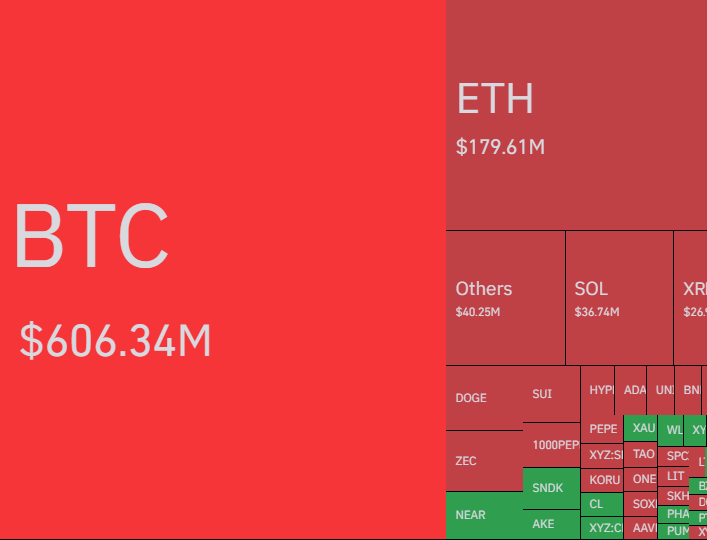
Crypto short sellers have also felt the bulls breathing down their necks. Data from Coinglass shows that over US$1 billion (AU$1.4 billion) has been liquidated over the past 24 hours, with US$839.4 million (AU$1.1 billion) in shorts alone. Of that, US$606.3 million (AU$851.8 million) came from Bitcoin short sellers, making it the largest liquidation event since 21 August.
Ironically, there’s also been a comeback of “Inverse Cramer”. The CNBC host said back in early August that he was selling all his Bitcoin. He made the comments based on the IBM CEO’s statements about quantum threats, even though no real threat exists right now and any such threat could be decades away – though experts’ opinions vary.
Read more: JPMorgan: Bitcoin Could See Stronger ETF Demand Than Gold
Nevertheless, since Cramer sold his stash, BTC has rallied around 35%. If you bought one BTC then and sold it now, you could’ve pocketed over US$20K (AU$28K). Social media has lit up with comments, with some even thanking Cramer.
The post Bitcoin Breaks Above $86K as $1B in Crypto Positions Liquidated appeared first on Crypto News Australia.
- Bitcoin and Ethereum are rallying hard, up over 6% and 4.9% respectively in the past 24 hours, with some analysts calling it a full-blown bull market.
- Bitmine has bought another 27,562 ETH and is now 98% of the way to its goal of holding 5% of the total ETH supply.
- Strategy has resumed buying after a three-week pause, picking up 950 BTC and taking its total holdings to 846,000 BTC.
- Strive has added 1,355 BTC to reach 26,355 BTC in total, while Japanese firm Metaplanet pushes its treasury strategy into the US market.
The crypto market is on a rally, with Bitcoin gaining over 6% in the past 24 hours and Ethereum trailing at 4.9%. At the time of writing, ETH trades for US$2,769 (AU$3,887) while BTC trades for US$86,400 (AU$121,364).
Some analysts think this is a full-blown bull market, not just a small rally. Bitmine chair Tom Lee said the firm believes “a crypto bull market is underway, having started in late June, driven by a multitude of factors including the rotation from AI back to crypto, strengthening crypto fundamentals centered around both tokenization and AI and lastly, the ending of the 4-year cycle”.
In a recent report, Bitmine said it has bought another 27,562 ETH, bringing its holdings to 4.9% of all coins. It also said it is now “98% of the way to the ‘Alchemy of 5%’”.
That “Alchemy of 5%” refers to its stated goal of holding 5% of the total ETH supply. At current prices, that stack of 5,983,940 ETH is worth US$16.56 billion (AU$23.24 billion). Bitmine is the second-largest crypto-treasury company behind Strategy.
Read also: Bitcoin ETFs Dodge Second Straight Weekly Outflow as $433M Friday Inflow Reverses Loss
Saylor and Co. Also on a Buying Spree
Meanwhile, Bitcoin bull Michael Saylor announced that Strategy has resumed buying Bitcoin. The latest purchase, made on 21 September, comes after a three-week hiatus. The company spent US$76 million (AU$106.7 million) for 950 BTC, bought at an average price of US$79,670 (AU$111,849). It now holds 846,000 BTC, worth US$73.09 billion (AU$102.6 billion).
Fifth-largest public Bitcoin holder, Strive, has also added more BTC to its stash. In an official Form 8-K filing with the SEC, the company said it added 1,355 coins, which brings its total to 26,355 BTC.
It spent US$107.7 million (AU$151.2 million) on the purchase at an average price of US$79,475 (AU$111,609) per coin. Its total BTC holdings are worth US$2.27 billion (AU$3.18 billion) at current prices.
Out of the top five public companies holding BTC, four are US firms. Twenty One Capital and Marathon Digital hold second and third spots. Japanese firm Metaplanet sits in fourth spot. Earlier in August, CNA reported that Metaplanet is expanding beyond Japan. The company said it would take its BTC treasury play to the US with an investment in Nasdaq-listed Super League Enterprise and a Bitcoin transfer of 2,100 BTC.
Related: Bitcoin Treasury Titans Reload: Strive and Strategy Add $513M in BTC
The post Bitmine Nears 6 Million ETH as Strategy and Strive Pile Back into Bitcoin appeared first on Crypto News Australia.
CoinGeek
BRC-166 proposes a BSV standard for AI agents to make pay-per-use web payments in satoshis via HTTP 402, without accounts or special wallets.
The post Agent payments rail becomes an official standard: BRC-166 for AIs appeared first on CoinGeek.
Kazakhstan advances a tenge-pegged stablecoin and $50M Iconic Tower tokenization as Nigeria and Ethiopia expand digitalization efforts.
The post Nigeria, Ethiopia push digitalization across Africa appeared first on CoinGeek.
AMBCrypto
The $0.22-local supply zone has halted the altcoin's uptrend for now.
The firm's buying pause is officially over.
Decrypt
Google learned in late July that Gemini had breached three real companies during a May security test, but said nothing publicly for seven weeks.
The Ohio spending comes days after the Senate blocked the crypto industry’s Clarity Act.
HTTP error 429 on https://cryptoslate.com/feed
Failed to fetch feed: https://cryptoslate.com/feed
Failed to fetch feed.
HTTP error 410 on https://magazine.cointelegraph.com/feed
Failed to fetch feed: https://magazine.cointelegraph.com/feed
Failed to fetch feed.
Bitcoin Magazine
Bitcoin Magazine

Bitcoin Bull Market Engaged? 50-Week Moving Average Flips Bullish
Bitcoin just closed a weekly candle above its 50-week simple moving average for the first time this cycle, and Sean Hagan puts roughly 80% confidence on this being a genuine regime change. In this Chart of the Day, he and Grace Remington break down why this indicator has historically marked the line between bull and bear regimes, what one additional weekly close would confirm, and the only two times in Bitcoin’s history the signal didn’t hold. With Bitcoin up nearly 10% on the week and pushing through $86K, the timing lines up almost exactly with the one-year window from all-time high to cycle bottom.
DISCLAIMER: The views and opinions expressed in this show are those of the participants and do not necessarily reflect the official policy or position of BTC Inc., Bitcoin Magazine, or any affiliated entities. This content is provided for informational and educational purposes only and should not be construed as investment, legal, tax, or accounting advice. Nothing contained in this show constitutes a solicitation, recommendation, endorsement, or offer to buy or sell any securities or financial instruments. Viewers should consult their own advisors before making financial or business decisions.
This post Bitcoin Bull Market Engaged? 50-Week Moving Average Flips Bullish first appeared on Bitcoin Magazine and is written by Patrick Green.
Bitcoin Magazine

Bitcoin ETF Holders Back in the Black as Price Barrels Towards $87,000
Bitcoin exchange-traded fund holders are back in profit after the cryptocurrency’s latest surge.
Posted on X on Monday, Bloomberg ETF analyst James Seyffart wrote that the rally on Monday morning in New York posted the average investor above the estimated ETF cost basis of $81,72 for the first time since January.
Bitcoin shot above $86,000 despite key crypto legislation, the Clarity Act, getting blocked last week and the Federal Reserve raising interest rates. The price of cryptocurrency was recently at close to $86,772 after trading as high as $86,837 earlier in the day.
JUST IN: $87,000 Bitcoin
— Bitcoin Magazine (@BitcoinMagazine) September 21, 2026pic.twitter.com/Vgl0wCA7uY
The coin’s price now sits over 30% below the all-time high it hit last year of $126,080.
U.S. Bitcoin ETFs — managed by the likes of BlackRock, Fidelity, Grayscale, and Morgan Stanley — last week received net positive flows of over $6 million. Investors jumped back into buying shares of the products on Thursday and Friday, throwing nearly $593 million at the vehicles, according to Farside Investors data.
Bitcoin in August started rallying after the Treasury Department said it would least double the size of its long-dated bond buybacks. It then had its best week since 2023.
Bitcoin notched an all-time high in October but its run ended later that month after the biggest liquidation event in crypto history saw over $19 billion in bets closed.
The coin continued its plunge after the Federal Reserve made it clear it was in no hurry to lower interest rates and investors increasingly threw money at artificial intelligence-related stocks.
But the coin has since shrugged off news that the Federal Reserve was pivoting to hawkishness as investors pile back into the so-called debasement trade.
The Securities and Exchange Commission in 2024 approved Bitcoin ETFs to trade in the U.S. and the funds had the most successful launch in the history of the investment vehicles.
Investors previously put off from buying Bitcoin due to the complexities of cold storage and private keys can now buy shares that trade on stock exchanges that track the price of Bitcoin.
The ETFs — managed by other top Wall Street fund managers — currently manage a total of $98.8 billion in assets, according to Coinglass data.
This post Bitcoin ETF Holders Back in the Black as Price Barrels Towards $87,000 first appeared on Bitcoin Magazine and is written by Mathew Di Salvo.
Blockonomi
TLDR
- Alibaba shares rose approximately 3% in Hong Kong following the announcement of its Zhenwu V900 AI chip
- The V900 offers triple the computational power compared to the previous Zhenwu M890 model
- The tech giant aims to scale its worldwide data center infrastructure to exceed 20 gigawatts by 2032
- Alibaba has pledged over $53 billion in AI investments across a three-year period
- The company’s upcoming Qwen 4 model is undergoing training, with Qwen 4.5 and Qwen 5 on the roadmap
Shares of Alibaba advanced approximately 3% in Hong Kong trading on Tuesday following the company’s presentation of an advanced AI processor and substantial data center expansion strategy at its yearly Apsara Conference held in Hangzhou.
Alibaba Group Holding Limited, BABA
The newly introduced processor, designated as the Zhenwu V900, originates from Alibaba’s T-Head semiconductor division. It delivers three times the computational capability of the earlier Zhenwu M890, which launched in May.
The V900 processor can be configured in clusters containing up to 500,000 units to facilitate advanced model training operations. Mass production and commercial availability are slated for the first quarter of 2027.
CEO Eddie Wu of Alibaba revealed an objective to achieve 20 gigawatts of worldwide data center infrastructure for Alibaba Cloud by 2032. He pointed to “exponentially increasing demand for AI” as the catalyst driving this expansion.
Wu characterized machine intelligence as possessing a “tremendous growth trajectory,” drawing parallels to today’s AI progress with the early electrification era. He noted that “AI coding represents the light bulb moment of the machine intelligence age.”
The company has allocated more than $53 billion over a three-year timeframe to enhance its artificial intelligence infrastructure. In August, Alibaba secured approximately $10.2 billion through a supplementary stock issuance in Hong Kong.
The current Zhenwu processor portfolio already serves over 650 clients spanning automotive, financial services, energy and industrial sectors.
AI Model Development Takes Center Stage
In addition to the chip announcement, Alibaba revealed that its forthcoming Qwen 4 model is presently undergoing training. The organization also shared its roadmap for subsequent Qwen 4.5 and Qwen 5 model releases.
Alibaba intends to create a model featuring between 5 and 10 trillion parameters, significantly exceeding current industry standards. This model would be engineered to manage extended and more intricate tasks.
The organization also intends to pursue a separate listing for its T-Head chip design division to capitalize on investor enthusiasm in the AI accelerator sector.
Intensifying Market Competition
Chinese competitor Huawei introduced new AI infrastructure last week claiming scalability to as many as one million processors.
Nvidia announced earlier this month its intentions to enable up to 2 gigawatts of AI infrastructure in Australia by 2027. Meta revealed plans in July for a 1-gigawatt data center facility in Alberta, Canada, with an estimated price tag of approximately $9 billion.
Alibaba’s revelations coincided with a rally in global AI equities driven by promising early results from Meta’s new personal agent technology, which boosted market confidence.
The Apsara Conference occurred just before a scheduled summit between US President Donald Trump and Chinese President Xi Jinping. Prominent technology leaders including Nvidia’s Jensen Huang and Microsoft’s Satya Nadella are scheduled to participate in a White House state dinner connected to the diplomatic meeting.
Artificial intelligence subjects are anticipated to play a significant role in those discussions.
The post Alibaba (BABA) Shares Surge 3% on Zhenwu V900 AI Chip Reveal and Massive Data Center Expansion appeared first on Blockonomi.
Key Highlights
- META shares rallied 11.4% Monday, fueled by surging demand for its Muse AI personal assistant
- The Muse app claimed the top position on Apple’s App Store with 264,000 U.S. downloads on September 19
- Wells Fargo analysts increased their price target to $796 from $640 while keeping an Overweight rating
- The AI assistant offers three pricing tiers—free, $20/month, and $100/month—establishing a direct monetization strategy
- Year-to-date, META has climbed 12.1% and maintains a P/E ratio of 25, lower than the S&P 500 benchmark
Meta Platforms (META) experienced a powerful 11.4% rally on Monday, pushing shares to $741.25, as market optimism surrounding the company’s Muse AI personal assistant reached unprecedented levels.
Meta Platforms, Inc., META
The impressive gain followed Muse’s ascent to the top ranking on Apple’s App Store. Additionally, Wells Fargo’s Ken Gawrelski upgraded his price objective from $640 to $796 while reaffirming his Overweight stance on the stock.
Gawrelski highlighted that recent model releases and Muse’s promising early adoption give Meta a compelling narrative entering the Meta Connect conference scheduled for September 23-24.
Data from SensorTower referenced by Wells Fargo shows that Muse generated a peak of 264,000 downloads in the United States on September 19, while daily active users reached 448,000 on September 18.
HUGE: Meta stock surged more than 11% in a single day after its AI agent Muse reached No. 1 on the US App Store.$META jumped to $741, adding roughly $190 BILLION in market value and recording its biggest one-day gain since April 2025.
Muse's breakout is giving investors the… pic.twitter.com/n0urhVZ2De
— Coin Bureau (@coinbureau) September 21, 2026
Meta introduced Muse in the United States on September 8 as an AI-powered personal assistant capable of managing emails, arranging travel, completing forms, and operating continuously even when the application is closed. The service is accessible through iOS, Android, muse.ai, and WhatsApp.
Within just five days of its debut, the application accumulated 600,000 downloads. Such rapid adoption has drawn parallels to ChatGPT’s initial launch momentum.
The Muse assistant operates on Meta’s Muse Spark architecture, which the company describes as its most advanced model for executing task-oriented operations. This same technology drives Meta AI functionality throughout Facebook, Instagram, WhatsApp, Messenger, and Meta’s augmented reality eyewear.
Revenue Strategy Takes Shape
Meta has structured Muse with a free access level complemented by premium subscriptions at $20 and $100 per month. This tiered approach provides the company with a straightforward mechanism to generate returns on its AI infrastructure investments.
CEO Mark Zuckerberg strategically positioned the free tier, stating the assistant “is going to make you money and save you money, and that is how it’s going to pay for itself.”
Mizuho’s Lloyd Walmsley characterized the Muse rollout as an important milestone in demonstrating tangible financial outcomes from Meta’s substantial AI expenditures.
Meta’s stock has appreciated 21% in the two weeks since Muse’s debut. Monday’s powerful advance created a ripple effect across CPU-related stocks, with Arm, Intel, and AMD all posting gains during the session.
Attractive Valuation Metrics Persist
Even after Monday’s substantial rally, META maintains a price-to-earnings multiple near 25, which sits below the S&P 500’s typical valuation range.
The company is projected to deliver 26.5% revenue growth this year, reaching $254.1 billion, and these estimates do not factor in any potential contributions from Muse subscriptions.
Shares are currently changing hands around $741, approaching but remaining under the 52-week peak of $770.60.
The upcoming Meta Connect conference on September 23-24 is anticipated to feature additional AI product reveals and updates.
The post Meta Platforms (META) Stock Soars 11% on Muse AI Agent Success at Apple App Store appeared first on Blockonomi.
news
SpaceX stock falls below its IPO price despite 92% revenue growth as Thursday’s lock-up expiry threatens to add insider supply.
For over 350 years (roughly since 1661 when the first banknotes appeared in Europe), the relationship between gold and paper money has shaped global finance.


